
Toshiba Electronics Europe will showcase its semiconductor and power conversion technologies at electronica 2026, taking place November 10–13 in Munich, Germany. The exhibition will include demonstrations of motor control and power electronics for … [Read more...]
BorgWarner selected to supply high-voltage traction inverters for EVs
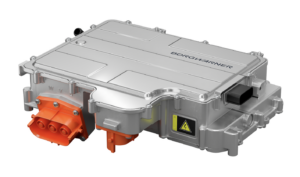
BorgWarner has secured a new contract to supply its next-generation high-voltage traction inverter technology for future battery-electric vehicle (EV) programs from a global automaker. The agreement builds on an existing customer relationship and … [Read more...]
New thermal gap filler delivers 12.0 W/m-K conductivity for automotive electronics
Parker Chomerics has introduced THERM-A-GAP PAD 120LOE, a thermal gap filler pad offering 12.0 watts per meter-kelvin (W/m-K) thermal conductivity with low silicone oil bleed and migration. The material is designed for long-term thermal management in … [Read more...]
High-voltage contactors designed for EV batteries and dc fast charging
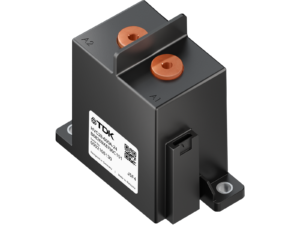
TDK Corporation has introduced the HVC28 and HVC29 series of gas-filled, high-voltage direct current (dc) contactors for electric vehicles (EVs), dc fast-charging infrastructure, and other high-power applications. Both series are available with … [Read more...]
Embedded SiC MOSFETs aim to reduce EV traction inverter switching losses
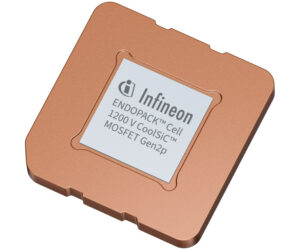
Infineon Technologies has introduced ENDOPACK, a chip-embedding platform designed for power electronics applications across multiple voltage classes and form factors. The platform extends the company's existing low-voltage chip-embedding technology … [Read more...]
New Hall-effect current sensor enhances EV traction inverter monitoring
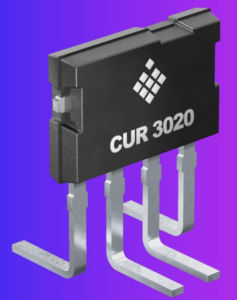
TDK Corporation has introduced the Micronas CUR 3020, a customer-programmable linear Hall-effect current sensor integrated circuit (IC) designed for current measurement in electrified vehicle (EV) traction inverters, battery management and disconnect … [Read more...]
Engineering challenges in EV high-voltage connections
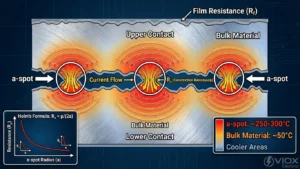
High-voltage connections are critical to the performance and reliability of electric vehicle (EV) electrical systems. Engineers must consider how connectors handle electrical loads and maintain reliable operation throughout the vehicle’s service … [Read more...]
Floating board-to-board connectors for EV powertrain electronics
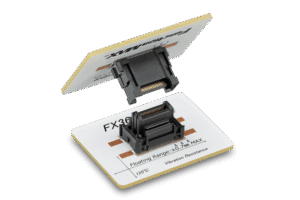
Hirose Electric has expanded its FunctionMAX family with the FX36 Series, a 0.5-mm-pitch floating board-to-board connector designed for use in electric vehicle (EV) powertrain electronics. The series accommodates circuit-board misalignment and … [Read more...]
Compact safety capacitors provide EMI filtering for EV chargers
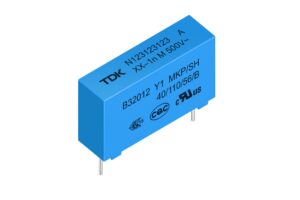
TDK has introduced the B3201*A5/B5/C5 series of Y1 safety capacitors designed to suppress electromagnetic interference (EMI) in electric vehicle (EV) power electronics. The components are intended for use in onboard chargers and EV charging … [Read more...]
New redundant position sensor for EV traction motors
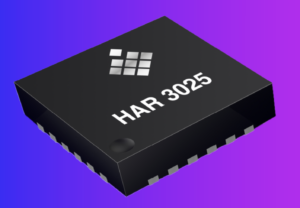
TDK has introduced the Micronas HAR 3025, a dual-die magnetic position sensor designed for safety-critical motor control in electric vehicles (EVs). The sensor supports high-voltage traction motor commutation and steer-by-wire systems, where accurate … [Read more...]
How do current-sensing errors propagate through EV motor control systems?
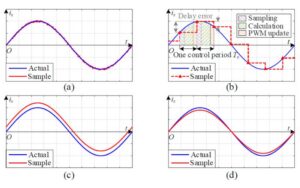
Torque decisions in an electric vehicle (EV) traction drive often start from two or three-phase current readings, which leaves little margin for current sensing errors. Field-oriented control (FOC) turns those readings into d-axis and q-axis … [Read more...]
New electric drive systems combine high-voltage architecture and integrated cooling
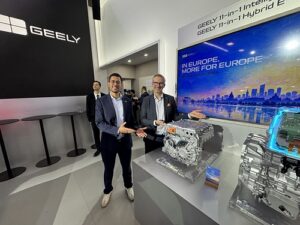
InfiMotion Technology has developed a range of electric drive systems for EV applications, including a dual-motor off-road drive unit, a 900-V coaxial drive system, and a compact electric drive unit (EDU) designed to improve efficiency and thermal … [Read more...]
Mitigating high-frequency vibration in structural battery packs
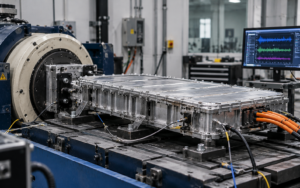
Modern electric vehicle (EV) battery engineering revolves around removing layers of structure so more active cell material fits into the same footprint. Increasingly, the battery also becomes part of the vehicle’s load-bearing architecture. Along … [Read more...]
Capillary-driven cooling technology targets heat buildup in EV motors

Adeia Inc. has developed a capillary-driven cooling technology designed to improve heat removal within high-power electric vehicle (EV) motors. The approach uses passive capillary forces to deliver liquid coolant directly to high-temperature regions … [Read more...]
New brake-force sensors support electromechanical braking in EVs
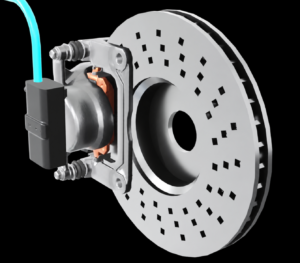
Sensata Technologies has announced that its brake-force sensors are being used in electromechanical braking (EMB) systems in production electric vehicles (EVs). The sensors measure clamping force directly within the brake caliper, providing real-time … [Read more...]
What causes bearing currents in EV motors and how engineers prevent them
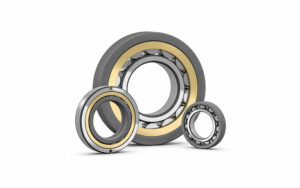
An electric vehicle (EV) traction inverter can drive unwanted current through the motor bearings. Its switching creates voltage on the motor shaft, even without a direct electrical connection between the windings and rotor. If the voltage across a … [Read more...]