Sensata Technologies has announced that its brake-force sensors are being used in electromechanical braking (EMB) systems in production electric vehicles (EVs). The sensors measure clamping force directly within the brake caliper, providing real-time feedback for closed-loop braking control at each wheel.
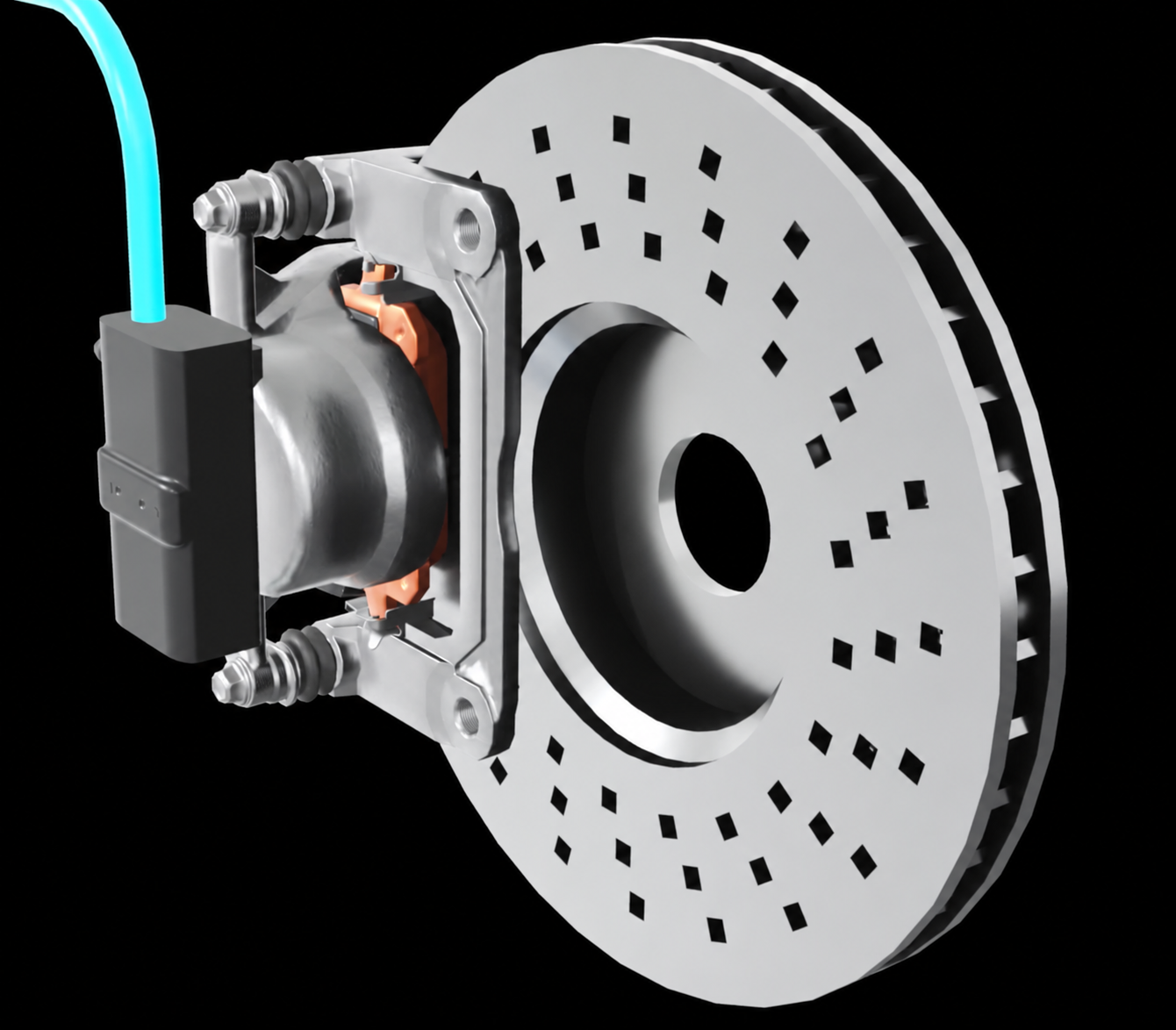 Unlike conventional hydraulic braking systems, which use fluid pressure to actuate the brakes, EMB systems rely on electric actuators to generate braking force. Accurate force measurements are necessary to regulate the clamping force applied to the brake disc and maintain consistent braking performance.
Sensata’s brake-force sensor integrates into the caliper and continuously transmits force measurements to the control unit. This feedback allows the system to adjust braking force independently at each wheel, supporting different operating conditions without relying on hydraulic pressure measurements.
The sensor uses Sensata’s Micro Strain Gauge (MSG) technology, which the company has applied in automotive braking systems for more than 25 years. The design measures mechanical force directly rather than inferring braking force from hydraulic pressure.
The sensor is designed to detect low-force braking events, including the initial contact between the brake pad and disc, when precise control is important for smooth deceleration. It also provides force measurements during higher-load braking conditions, including emergency stops.
The sensor connects directly to the caliper control unit without requiring additional connectors. Its compact design is intended to support integration into electromechanical brake assemblies while limiting added weight and packaging requirements.
The transition to EMB systems also allows vehicle manufacturers to eliminate hydraulic components, including brake lines and fluid circuits. Individual wheel-level control can support vehicle dynamics functions and integration with advanced driver assistance systems (ADAS).
Sensata has not identified the vehicle manufacturers or models currently using its brake-force sensors. The announcement confirms their application in production EVs but does not provide specific deployment volumes or performance test results.
Filed Under: Sensors, Software, Technology News