
Material selection is often treated as an engineering and manufacturing decision, but its effects reach well beyond the production line. Early design choices influence what can be recycled or reused at the end of a vehicle’s life, along with a … [Read more...]
Q&A: What the shift to chrome-free coatings means for EV design
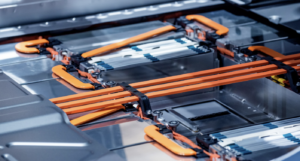
The transition away from traditional chrome-based coatings presents new challenges for electric vehicle (EV) manufacturers. Alternative surface treatments must provide the same level of protection against corrosion and wear while meeting the … [Read more...]
Inside the development of the Megawatt Charging Standard

The publication of International Electrotechnical Commission (IEC) standard 61851-23-3 establishes the international requirements for the Megawatt Charging System (MCS), developed to meet the charging needs of electric trucks and other heavy-duty … [Read more...]
Q&A: How EV architectures are changing high-speed connectivity

As electric vehicles (EVs) add more cameras, radar, and other high-bandwidth sensors, the amount of data moving through the vehicle continues to grow. At the same time, those data links have to operate alongside high-voltage power electronics … [Read more...]
Q&A: How do battery-pack design choices affect EV assembly?

Battery-pack assembly becomes significantly more difficult as pack architecture evolves. The challenge is not simply moving a heavy component through a production line. The pack has to remain correctly positioned throughout assembly while the process … [Read more...]
Q&A: How adaptive charging responds to shifting battery limits

Fast charging has become a design target in electric vehicle (EV) engineering. However, the amount of current a pack can safely accept changes with temperature and battery condition. Cold slows lithium transport into the anode and increases … [Read more...]
Part II: What CT can reveal about EV component design

X-ray computed tomography (CT) can reveal the internal structure of electric vehicle (EV) components without requiring disassembly. The technology gives engineers a way to examine how a component is built while preserving the relationships between … [Read more...]
Part I: How x-ray CT can improve EV component inspection and validation
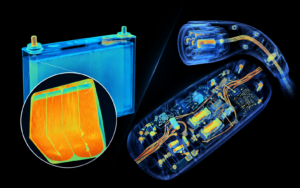
X-ray computed tomography (CT) gives engineers a way to inspect the inside of an electric vehicle (EV) component without taking it apart. The technology creates a three-dimensional view of an assembled part so internal features can be examined while … [Read more...]
Q&A: How GaN can improve EV power architectures
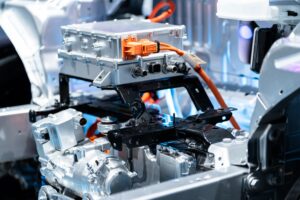
Gallium nitride (GaN) is moving into higher-power electric vehicle (EV) applications as engineers look for ways to improve power-conversion efficiency and reduce the size of vehicle power electronics. While GaN is already established in lower-power … [Read more...]
Q&A: Engineering vehicle-to-grid integration

Vehicle-to-grid (V2G) technology turns an electric vehicle (EV) from an electrical load into a potential energy resource. Sending power back to the grid, however, requires more than a bidirectional charger. The vehicle and charging system must … [Read more...]
Q&A: How standardized imaging can improve battery material characterization

Reactive alkali metals such as lithium and sodium are increasingly important to battery development. Their sensitivity to air, moisture, and electron beams makes them difficult to characterize without altering the structures researchers are trying to … [Read more...]
Part II: Engineering two-phase cooling for automotive reliability
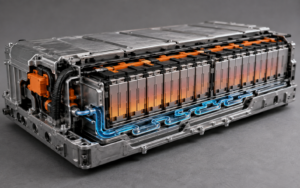
Two-phase cooling can address the concentrated heat loads found in power-dense electric vehicle (EV) systems, but thermal performance alone isn’t enough for automotive production. The cooling system must also operate predictably throughout the … [Read more...]
Part I: How 800-V architectures are challenging EV thermal management
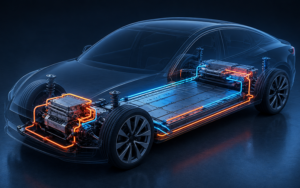
Electric vehicle (EV) thermal management is often discussed in terms of total heat removal, but higher-voltage architectures are creating a more localized challenge. As power electronics become smaller and more power-dense, waste heat is increasingly … [Read more...]
Part II: Why inductive sensing is replacing resolvers in EV traction inverters

Rotor position sensing has long relied on resolvers because of their reliable performance in demanding automotive environments. Resolvers are still reliable, but the technology landscape has changed, and equally dependable alternatives can now do the … [Read more...]
Part I: Rotor position sensing challenges in EV traction inverters

Rotor position sensing plays a critical role in electric vehicle (EV) traction inverters by providing the angle feedback needed for precise motor control. As inverter systems move toward higher efficiency and power density, enabled by higher … [Read more...]
The engineering questions behind AI in EV development

Artificial intelligence (AI) has worked its way into nearly every stage of electric vehicle (EV) development. It shows up early, when researchers evaluate new battery materials, and it stays long after deployment, when operators manage charging … [Read more...]