
Adam Kotlarek, Automotive Business Development Manager, MacDermid Enthone
The transition away from traditional chrome-based coatings presents new challenges for electric vehicle (EV) manufacturers. Alternative surface treatments must provide the same level of protection against corrosion and wear while meeting the electrical and mechanical demands of EV components.
Coating selection can affect component performance and long-term reliability. Introducing new chemistries also requires careful validation to ensure they meet automotive standards without adding complexity to manufacturing.
In this interview, Adam Kotlarek, automotive business development manager at MacDermid Enthone, discusses the engineering considerations behind chrome-free coatings and how manufacturers can evaluate alternative finishes for EV applications.
Here’s what he has to say…
Which EV components are most affected by the transition away from traditional chrome-based coatings?
The shift away from traditional chrome touches the functional and visual elements of electric vehicles. On the visual side, think of interior and exterior trim, such as grilles, badging, and door handles, where we’re replacing traditional chrome plating with new, eco-friendly trivalent systems and solutions.
Mechanically, high-wear components like compressor scrolls, hydraulic valves, and electric motor shafts are moving away from hard chrome toward high-performance electroless nickel alloys. It’s a sweeping evolution that touches everything from brand aesthetics to powertrain durability.
What performance characteristics must chrome-free coatings maintain in demanding EV environments?
EVs place unique mechanical and chemical demands on surface coatings. Underbody components take a constant beating from external factors like road salt and moisture, so replacement chemistries must hold up, often delivering thousands of hours of resistance without breaking down. They also must remain chemically stable around coolants and fluids.
Fortunately, modern chrome-free alternatives are improving rapidly, and in many applications they now match or surpass these standards.
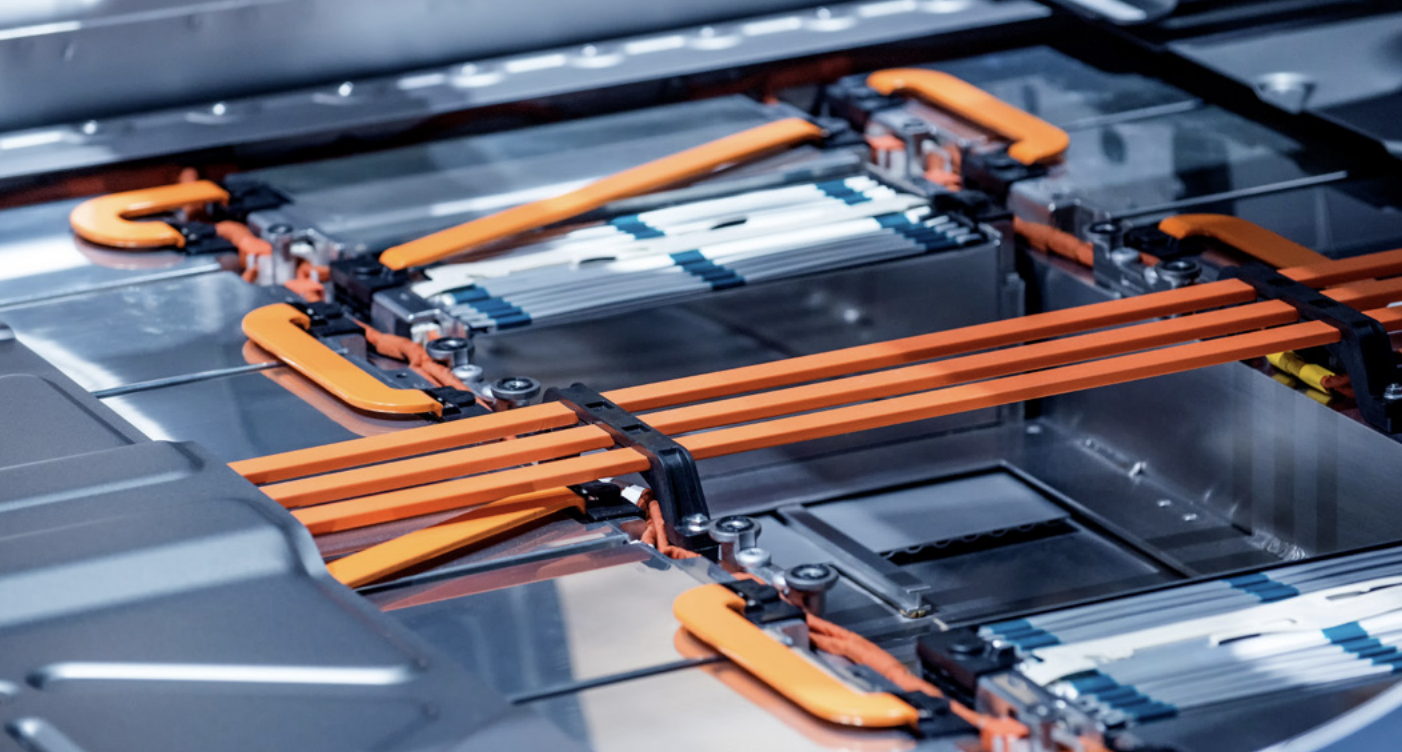
Surface finishes help protect electrical connections in EV battery systems. (All images courtesy of MacDermid Enthone)
How does electroless nickel compare with traditional chrome in terms of corrosion resistance and wear performance for EV systems?
Hard chrome was long the default for wear resistance, but it has notable physical limits, especially line-of-sight plating that leaves recessed areas unprotected. Electroless nickel (EN) addresses this because it deposits 100% uniformly across complex geometries, blind holes, and internal fluid channels.
High-phosphorus EN provides an amorphous, pore-free barrier that outperforms traditional hard chrome in acidic and saline environments. For complex EV cooling plates and power electronics, electroless nickel offers a strong balance of uniform corrosion protection and high wear resistance.
What validation and qualification challenges do automakers face when introducing new coating chemistries into EV platforms?
When you change a coating chemistry, you’re re-engineering a proven manufacturing baseline. Across different forms of chrome, for instance, there are different grain structures, requiring OEMs to re-validate their stacks to hit traditional salt-spray targets.
On plastic substrates, shifting away from chromic acid etching requires rigorous thermal shock and peel-strength testing to ensure coatings won’t delaminate under severe climate cycling. There’s also the challenge of mass-production stability — ensuring new bath chemistries maintain color consistency (L*a*b* metrics) across millions of parts.
Lastly, automakers must validate these coatings under simultaneous exposure to high dc voltages, humidity, and dielectric fluids. These conditions are unique to EV platforms.
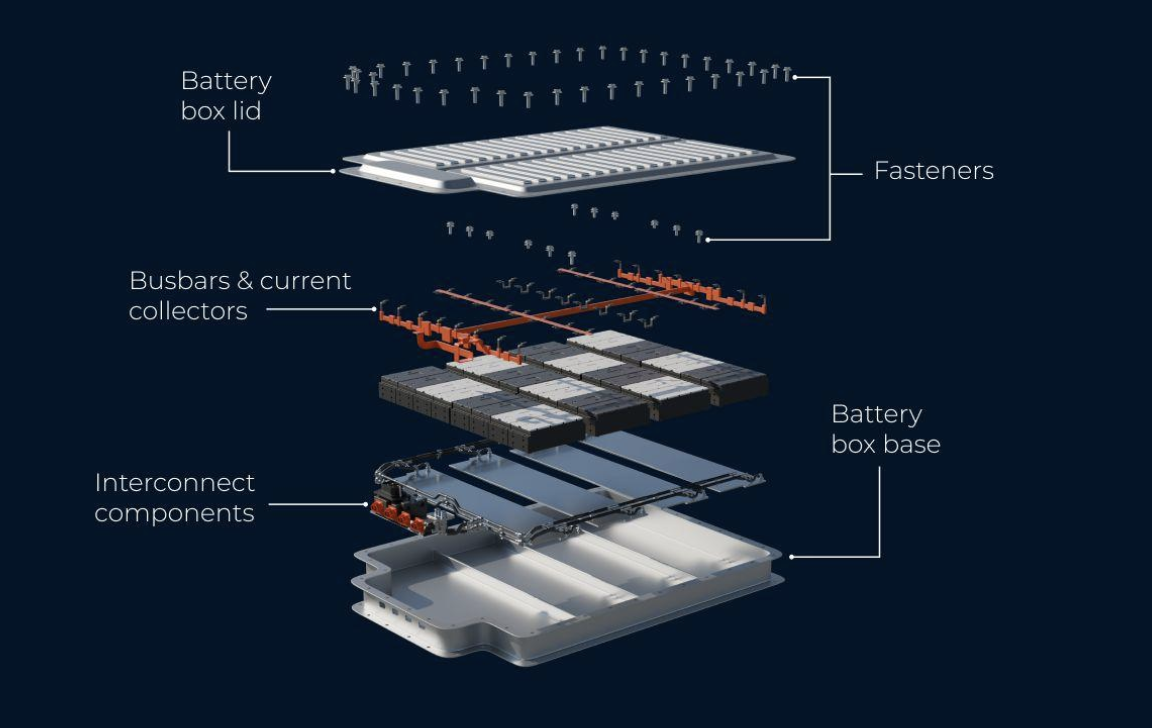
EV battery components that may require specialized surface finishes, including busbars, electrical interconnections, and battery enclosures.
Are there specific EV subsystems where chrome-free coatings are becoming more important?
Absolutely, with the rapid growth of high-voltage powertrain and thermal management systems. High-voltage busbars and power interconnects rely on functional finishes—such as silver or specialized tin — to minimize electrical contact resistance, prevent joint oxidation, and support automated manufacturing processes like laser welding.
Charging connectors require hard-wearing, low-friction silver coatings designed to endure thousands of mating cycles without fretting or loss of conductivity.
In structural areas, battery enclosures and trays use chrome-free passivates to protect steel and aluminum frames from stone chips and moisture ingress while preserving critical grounding zones. Finally, inside liquid cold plates, intricate internal fluid channels cannot be plated with line-of-sight hard chrome; here, uniform electroless nickel provides the necessary barrier to resist glycol-based coolant corrosion.
How could coating changes affect electrical conductivity, grounding, or EMI performance in EV architectures?
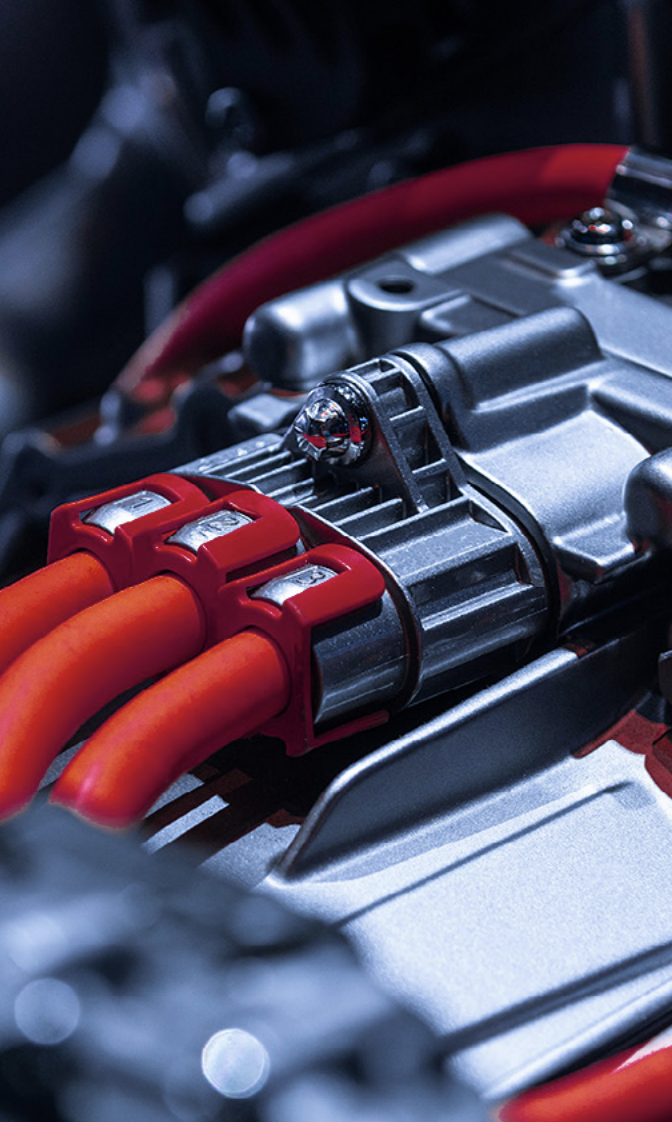
Metal-plated engineering plastics can provide EMI shielding in EV electrical systems.
Coating selection directly impacts signal integrity, power efficiency, and long-term joint durability. Because electrical requirements vary significantly across an EV, plating choice is strictly application-specific, driven by factors like conductivity targets, mating and unmating cycles, durability expectations, and manufacturing processes like laser welding. Rather than relying on a single option, engineers select finishes tailored to the component.
While low-phosphorus electroless nickel serves niche applications needing uniform thickness and localized wear protection, high-phosphorus nickel is reserved for maximum corrosion resistance on non-contact surfaces.
Additionally, plating-on-plastics provides vital EMI shielding against inverter noise, and nickel underlayers prevent galvanic corrosion at bimetallic interfaces to protect frame grounding over time.
How early in the EV design process should engineers evaluate coating selection and validation requirements?
Coating selection needs to happen during early architecture definition, rather than late in the game. Early selection allows you to ensure a layer of accuracy and predictability about the performance of the components of the vehicle.
Examples of this can include coating layer thickness and substrate compatibility for pretreatment steps. It also prevents costly manual masking on zones designated for welding or grounding. Given that full OEM cyclic corrosion and environmental testing can take a long period of time, evaluating finishes early is critical to avoiding launch delays.
How are manufacturers adapting their processes as the industry moves toward chrome-free surface treatments?
Transitioning to chrome-free treatments is a manageable evolution that calls for some strategic operational adjustments. By updating materials, filtration, and rinse designs, applicators can successfully modernize legacy lines. While these new processes require precision, such as tighter control over chemical baths for example, they are easily supported by automated or additional systems.
From a regulatory standpoint, moving away from hexavalent chrome offers a clear path to sustainability by eliminating PFAS-based suppressants. Ultimately, the industry is achieving global consistency as OEMs partner with suppliers to ensure every location delivers uniform, high-quality results.
Filed Under: Featured Contributions, Q&As