Heavy-duty electric vehicles (EVs) place considerable demands on their drivetrains, with sustained high torque and repeated loading over long service lives. An electric axle (e-axle) adds to that challenge by packaging the electric motor and gearbox into one compact drive unit. Gears and bearings no longer operate on their own, since the motor’s behavior and the heat inside the assembly affect how they wear.

Rasmi Ranjan Choudhury
Durability testing is meant to catch these problems before production, but test profiles don’t always match how vehicles are used in the field. When real duty cycles turn out to be more severe than the ones used in validation, components can see loads they were never designed for. That’s how a system can pass every test and still wear out early once it reaches customers.
Rasmi Ranjan Choudhury has spent more than 20 years investigating these kinds of problems. He’s a senior physical engineer at Capgemini America, Inc., assigned to Stellantis as assistant chief engineer and lead problem solver for driveline programs, and previously worked on heavy-duty Class 8 e-axles at Allison Transmission.
In this Q&A, Choudhury walks through a real field failure, explains how engineers trace a problem to its root cause, and shares what that work means for how e-axles should be validated.
Here’s what he had to say…
What are the biggest reliability challenges unique to heavy-duty e-axles, and how do they differ from those in conventional drivetrains?
Heavy-duty e-axles combine several failure paths in one compact system. In a conventional drivetrain, an investigation may stay mostly mechanical. In an e-axle, gears and bearings interact with the electric motor, controls, thermal conditions, lubrication, and the way the vehicle is actually used.
For heavy-duty applications, high torque and severe duty cycles make that interaction especially important. A component can meet its original design assumptions but still be exposed to higher loads or temperatures in real service. Noise and vibration also become more noticeable because electric vehicles do not have the same engine noise masking other driveline sounds.
The biggest challenge is making sure the validation profile represents real customer use. E-axle reliability has to be treated as a system-level problem, not just a component-level problem.
Can you share an example of an e-axle that passed validation but later failed in the field? What did this reveal about the testing approach?
One field issue I worked on involved a needle roller bearing on an e-axle main shaft. The system had completed its validation and durability requirements, but after launch some customer vehicles operating under severe duty cycles developed excessive bearing wear and spalling, a form of surface fatigue where small pieces of material break away from the bearing. That led to increased noise and vibration and, in some cases, loss of bearing function.
The investigation showed that the real customer duty cycle was more severe than the original validation profile. The vehicles were seeing more frequent high-torque events, rapid acceleration, sustained highway operation, and higher thermal loading. Those conditions increased bearing loads beyond the assumptions used during development and also accelerated lubricant degradation and contact fatigue.
The main lesson was that passing validation is not enough if the test profile does not represent the most demanding real-world use. We revised the duty-cycle assumptions and validation load spectrum, which defines the range and frequency of loads experienced by a component, to better reflect what the vehicles were actually experiencing.
When investigating an e-axle failure, how do engineers identify the root cause, and what can lead to an incorrect diagnosis?
I start with the pattern, not with an assumption about the failed part. We look at build date, mileage, operating conditions, supplier or production batch, geography, and whether the issue appears broadly or is concentrated in a specific plant, line, or period.
Then we compare failed and good units. Teardown inspection, dimensional analysis, wear patterns, validation data, and field data help separate a design issue from a manufacturing or assembly issue. For more complex cases, methods such as Red X can compare Best of Best (BoB) samples, which perform as intended, with Worst of Worst (WoW) samples, which exhibit the most severe failures, to identify the differences that matter.
An incorrect diagnosis usually comes from stopping at the first visible symptom, assuming the failed component is the root cause, or changing several variables at the same time. Diagnostic codes can help narrow the search, but they are only a starting point. The conclusion still has to be supported by physical evidence and data.
What operating conditions and testing methods are most important when validating heavy-duty e-axles under high torque and repeated loading?
In my e-axle work, I have tested, supported, or reviewed a range of validation and reliability activities. These include durability testing under customer duty cycles, gear fatigue testing, torsional and impact fatigue testing, bearing endurance testing, noise, vibration, and harshness (NVH) evaluation, thermal performance and temperature monitoring, lubrication validation, electric motor and gearbox integration testing, and hot and cold vehicle-level testing.
For failed units, I also use detailed teardown inspections, dimensional analysis, wear-pattern evaluation, and comparison against validation test data.
The important part is not just making a test severe. The load spectrum and duty cycle have to represent how the vehicle is actually used. A test can be aggressive and still miss the real field failure if it creates a different failure mode.
How can field performance and warranty data reveal reliability issues that weren’t identified during initial development and validation?
Warranty data is useful because it shows patterns that development testing may not. I look at when failures occur, mileage, operating environment, customer duty cycle, build date, supplier or plant information, and whether the issue is isolated or becoming more common.
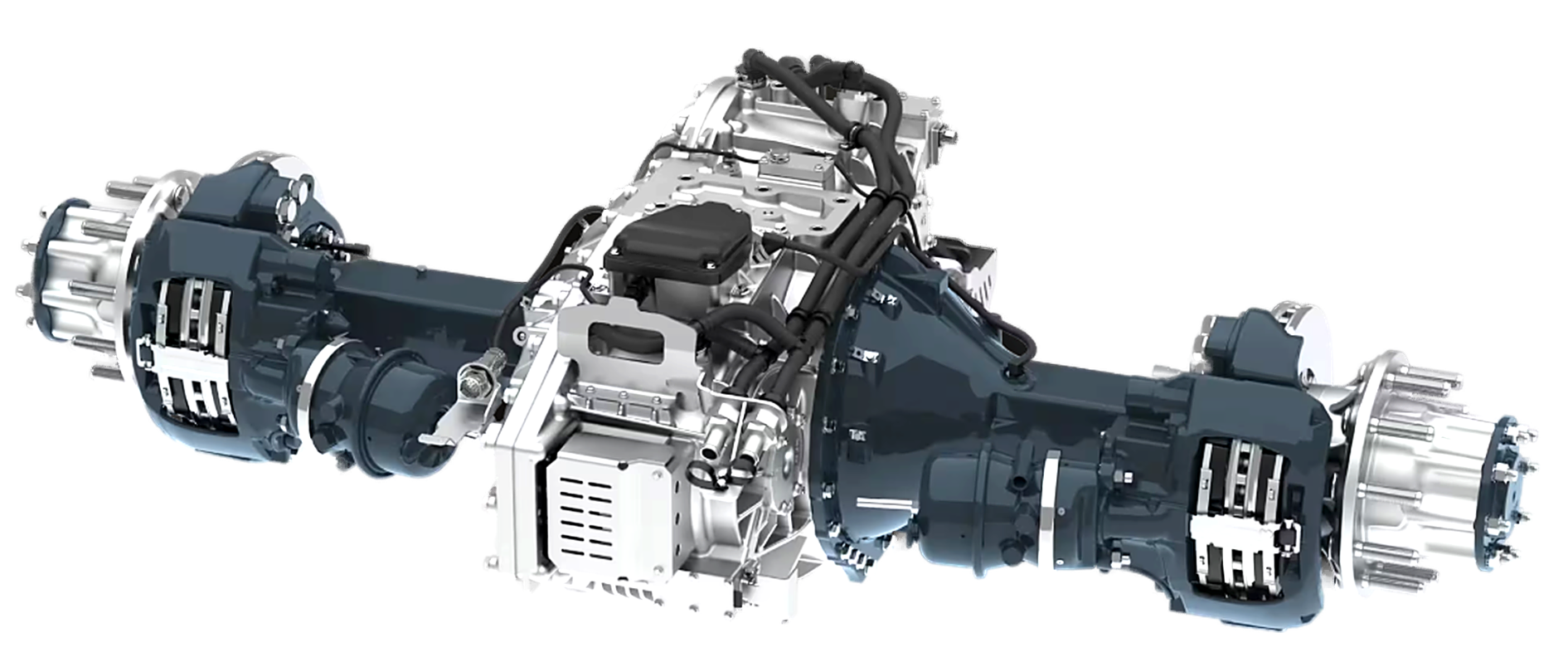
An integrated e-axle combines the electric motor and gearbox with the differential in a single assembly. (Image: Allison Transmission)
Then I compare those patterns with returned hardware. Field parts, teardown findings, and validation data together help determine whether the issue is related to design, manufacturing, assembly, or a supplier process.
That feedback should go back into future design assumptions and validation plans. If the field shows a condition that was not represented realistically during development, the next program should not repeat the same gap.
Once a root cause has been identified, how are those findings incorporated into design improvements or revised validation procedures?
In the bearing case, the corrective action was not one change. We updated both the hardware decision and the validation process.
First, we re-evaluated the bearing dynamic load requirements and selected a higher-capacity needle roller bearing with improved fatigue life. We also revised the validation requirements by adding more aggressive customer duty-cycle profiles and increasing the load spectrum to better represent real-world use.
We reviewed lubrication performance at elevated temperatures and optimized lubrication flow and retention around the bearing location. The design review process was also updated through design failure mode and effects analysis (DFMEA) and design review based on failure mode (DRBFM) documentation, with more attention to customer-usage variability and overload events.
Finally, we tracked warranty claims and service data after implementation to confirm that bearing-related failures were significantly reduced. I consider the issue closed only when field data shows that the corrective action is working.
Looking ahead, where do you see the greatest opportunities to improve the reliability of heavy-duty electrified drivetrains?
I see three main opportunities. First, use more real-world vehicle data to build validation cycles that better reflect actual torque, speed, temperature, and duty cycles. Second, improve simulation and hardware-in-the-loop testing so engineers can evaluate more operating conditions before physical testing.
Third, keep mechanical, controls, thermal, and lubrication teams connected throughout the investigation. These systems increasingly affect each other in electrified drivetrains.
AI can help identify patterns in large data sets, but engineers still need to determine whether those patterns are physically meaningful, verify them on hardware, and validate the corrective action.
Filed Under: Featured Contributions, Q&As