Editor’s note: This article was originally published in November 2023. It is updated here to reflect the publication of SAE J3400, the renaming of NACS, current automaker adoption, and higher Supercharger power levels.
The North American Charging Standard (NACS) is a charging standard for electric vehicles launched by Tesla Inc. in November 2022. The NACS was initially called the Tesla Charging Connector, a unique charging interface for Tesla vehicles. The SAE task force overseeing the standard has since formalized the name North American Charging System, since it now covers more than just the connector.
This new charging standard addresses ac and dc charging on a single platform. The NACS standard is now publicly available for other manufacturers’ technical specifications.
SAE International said in June 2023 that it would standardize the NACS standard as SAE J3400. This would help ensure that everyone in the business uses the same one.
SAE published the J3400 Technical Information Report in December 2023 and elevated it to a Recommended Practice in September 2024, followed by separate documents covering adapters and connector and inlet dimensions in 2025. Nearly every major automaker selling EVs in North America has since committed to the connector, and many 2025 and 2026 models, including the Kia EV6, Toyota bZ, and Cadillac Optiq, now ship with a native port.
When comparing NACS and CCS, the charge interface size is the main difference, as shown in Figure 1. The NACS interface is much smaller because it charges with ac and dc power using the same pins. Even though the NACS and CCS are physically different in size, it’s important to note that NACS chargers typically use the same communication protocols as CCS to talk between the EV and the charge station. This lets the charging station and car agree on the charging parameters and ensure the charge is safe.
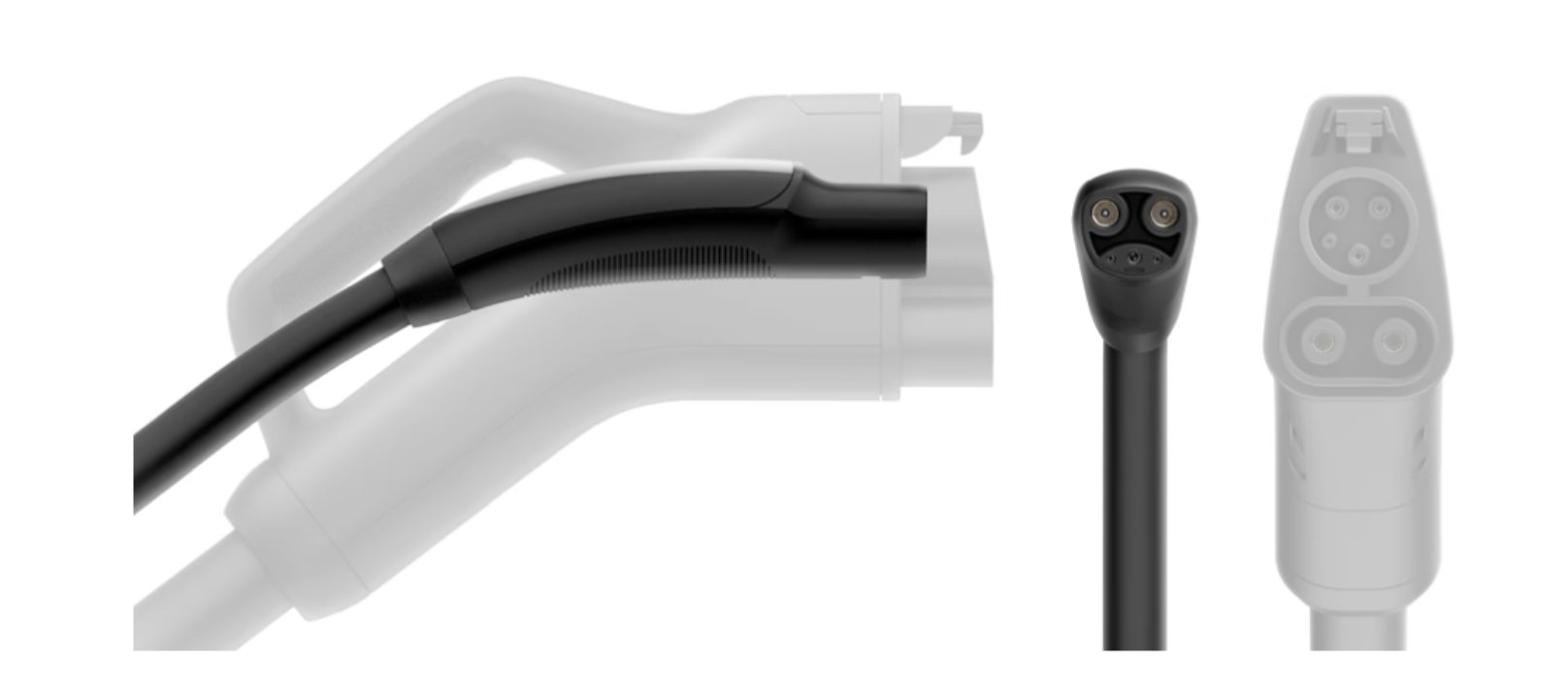
Figure 1. A physical comparison of the NACS (black) and CCS (white) connectors. (Image: Tesla)
When a single-phase system is available, the NACS can deliver up to 48 A of current at 240 V. It translates closely into 11.5 kW of charging power. In commercial settings where 277-V single-phase power is available from a three-phase supply, the NACS can deliver up to 80 A, depending on the charging equipment and vehicle.
The NACS can deliver up to 250 kW of power with version 3 of the Tesla Supercharger. Tesla’s V4 Supercharger cabinets, now rolling out, raise that to up to 500 kW for compatible cars and support vehicle architectures from 400 to 1,000 V.
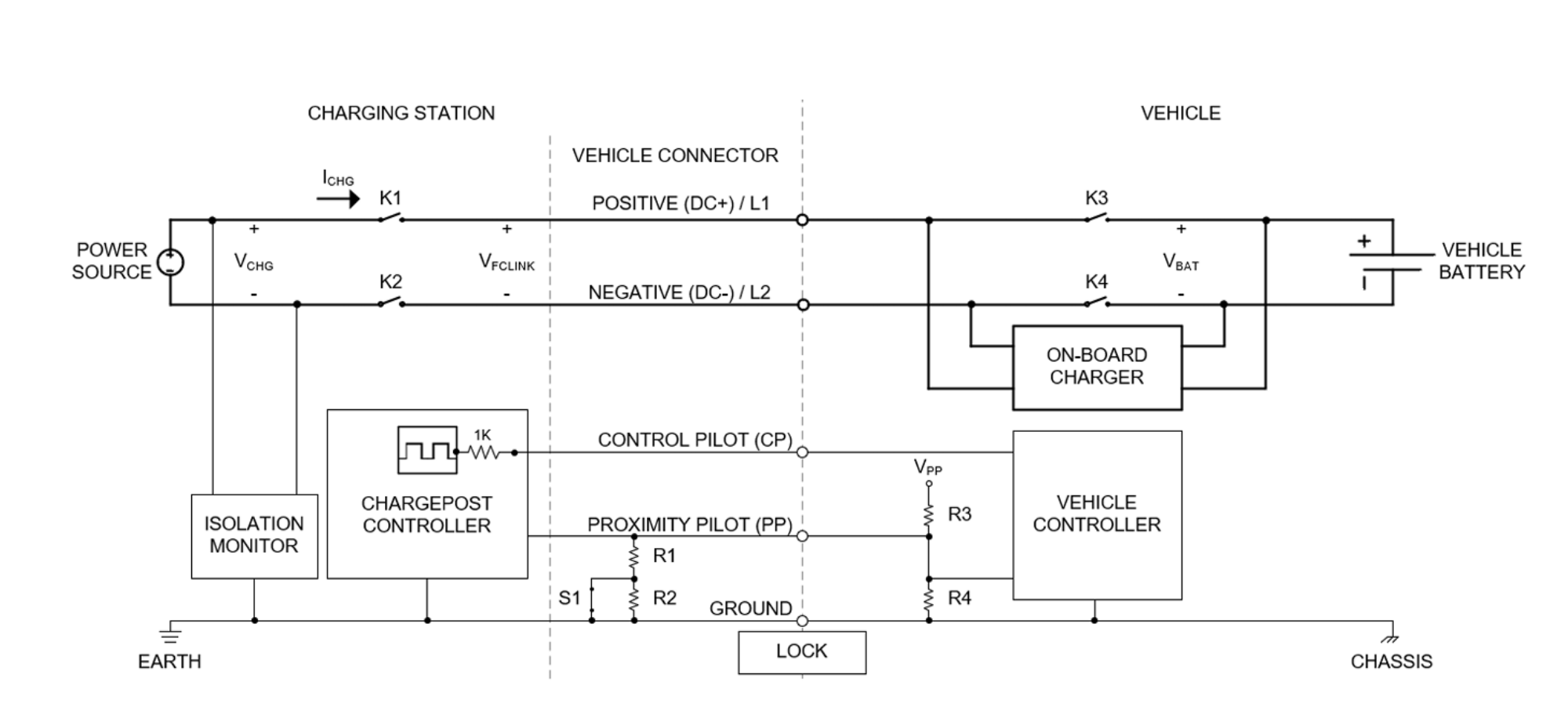
Figure 2. Simplified charging system of NACS. (Image: Tesla)
The NACS charging system
The entire NACS can be divided into three phases, as shown in Figure 2. The first phase is the charging station, the second is the vehicle connector, and the last is the vehicle itself.
The first phase, the charging station, is an assembly of different components, including controllers, that will charge the EV battery. The main components include the power source, isolation monitor, chargepost controller, and contactors.
The role of the isolation monitor is to measure the isolation between the earth and the vehicle chassis. The isolation monitoring is applicable when dc charging is carried out. The chargepost controller interacts with the vehicle controller to regulate the charging process.
The second phase is the vehicle connector, which consists of five pins for different purposes. Two pins are power terminals to deliver ac or dc power to the battery. The control pilot (CP) pin is a digital communication link between the vehicle and the charging station. The different charging states of the EV battery are communicated with the help of pulse width modulation.
The proximity pilot (PP) pin determines the status of the vehicle connector with the help of low-voltage signals. The ground pin, just like in any electrical connection, provides the ground path between the vehicle chassis and the earth. The last phase, the vehicle, consists of the EV battery, onboard charger, vehicle controller, and necessary contactors. The purpose of the onboard charger is to convert ac power to dc power when an ac charging system is used.
It’s worth mentioning that the contactors K3 and K4 are open during ac charging and closed during dc charging. It also implies that the onboard charger is inactive during dc charging. The vehicle controller works closely with the chargepost controller for critical safety through the CP and PP.
The NACS is compatible with vehicle-to-X power transfer, which means it’s compatible with vehicle-to-load, vehicle-to-grid, and vehicle-to-home. SAE J3400 also supports 1,000 Vdc fast charging. The connector can handle bidirectional power transfer, but vehicle-to-grid and backup power also depend on separate communication and grid interconnection standards, as well as compatible vehicles and equipment.
Summary
Tesla operates one of the largest electric vehicle fast-charging networks in the world. Therefore, it seems logical for them to open their charging protocol to the public, now known as NACS. Such a move enables a win-win situation for their business and the EV users, including the government and private bodies.
Most EV manufacturers in North America have since adopted the connector, and SAE J3400 has made it an open industry standard. Additionally, the NACS charger is significantly smaller in size and compact in structure compared to CCS while typically using the same communication protocols as CCS.
References
- North American Charging Standard, Tesla
- Opening the North American Charging Standard, Tesla
- SAE International Announces Standard for NACS Connector, Charging PKI and Infrastructure Reliability, SAE
- New SAE J3400 guidelines streamline EV charging compatibility, EV Engineering & Infrastructure
- SAE Advances EV Charging Standards, The EV Report
- SAE J3400 Standard Timeline, Joint Charging
- All the EVs That Use Tesla’s NACS Plug, CarGurus
- Tesla Launches First “True” V4 Supercharging Station, EV Charging Stations
Images
- Figure 1, Tesla
- Figure 2, Tesla
Filed Under: Charging, FAQs, Featured Contributions