Charging rates keep rising as more electric vehicles (EVs) move to 800-V architectures, placing new demands on the electrical equipment behind the charger. In many locations, limited grid capacity makes it challenging to meet growing charging requirements.

Michael D. Farkas, Founder and CEO of NextNRG
In this interview, Michael D. Farkas, founder and CEO of NextNRG, discusses how charging sites should be engineered for higher power demands. He explains how onsite battery storage can reduce peak grid demand, while emphasizing the need for additional electricity generation.
Farkas, who has worked in EV charging since 2008 and previously founded Blink Charging, also explains how fleet sites differ from public charging. He shares his views on bidirectional and wireless charging and where he sees charging infrastructure heading.
This conversation is also available as an episode of EV Talk, which you can listen to here.
Here’s what he had to say…
How do 800-V vehicle architectures and higher peak charging rates change the way charging sites should be engineered today?
We’re moving toward higher-voltage vehicles and significantly higher charging rates, and that has implications for the entire electrical architecture of charging sites. It’s changing the game.
That entails investment in not only the charger but everything behind it. It’s a pretty expensive upgrade. As it is, we don’t have enough energy across the board, and not just for charging. When we look at AI, data centers, quantum computing, and the like, we need to plan ahead, especially if we want to see a massive rollout of EVs. We need to plan for much faster charging.
We’re seeing that happen in other parts of the world, especially China. The U.S. is a bit of a laggard, but we’re catching up.
When available grid capacity is limited, what options do engineers have to increase charging capacity without immediately requiring a major utility upgrade?
This is one of the biggest challenges facing EV infrastructure today. In many locations, the available grid capacity simply isn’t sufficient for the charging demands that operators want. But there are ways to address it without upgrading the grid itself.
One of the most effective solutions is onsite battery storage. You can draw power from the grid, charge those batteries, and then tap into them once a vehicle needs charging. The problem is that storage doesn’t replace energy generation. It only allows you to draw energy off the grid during downtime.
We’re also looking at smart microgrid deployments close to charging sites. Unfortunately, deploying solar panels near every charging site isn’t viable, so we need a mix of technology.
The most important thing is upgrading the grid. The government needs to focus on helping industry build out the grid, whether by subsidizing or incentivizing it. We need additional generation, no matter what.
How should engineers size onsite energy storage relative to available grid power at high-use fleet sites?
The most important thing is to size storage based on the actual profile of the fleet, rather than using a fixed ratio of battery capacity to grid capacity. You have to analyze the vehicles, their charging patterns, how much energy each one needs, and in what order they need to be charged.
For example, a fleet may have emergency vehicles that must be available at any time, along with other vehicles that are only used during working hours. So it’s about understanding the fleet and then designing the infrastructure around it.
There’s also an important technical distinction. Storage can reduce peak grid demand, but it can’t indefinitely compensate for a grid connection that supplies less energy than the site consumes over time. Nothing makes up for the energy a location needs.
What changes to a site’s electrical architecture are required if bidirectional or vehicle-to-grid (V2G) capability is added?
I’m a big fan of bidirectional energy transfer. While I was at Blink Charging, we were one of the first charging networks to implement bidirectional capabilities in all of our chargers, including ac chargers and dc fast chargers.
The reason is simple. Imagine all these batteries supporting the grid instead of taxing it. Every kilowatt-hour stored in these batteries could be used when the grid is weak.
For those who aren’t familiar, bidirectional charging allows energy to flow from the grid through the charger to the vehicle. Then, when the grid needs energy, it can pull that energy from the vehicle’s battery, through the charging station, and back into the grid.
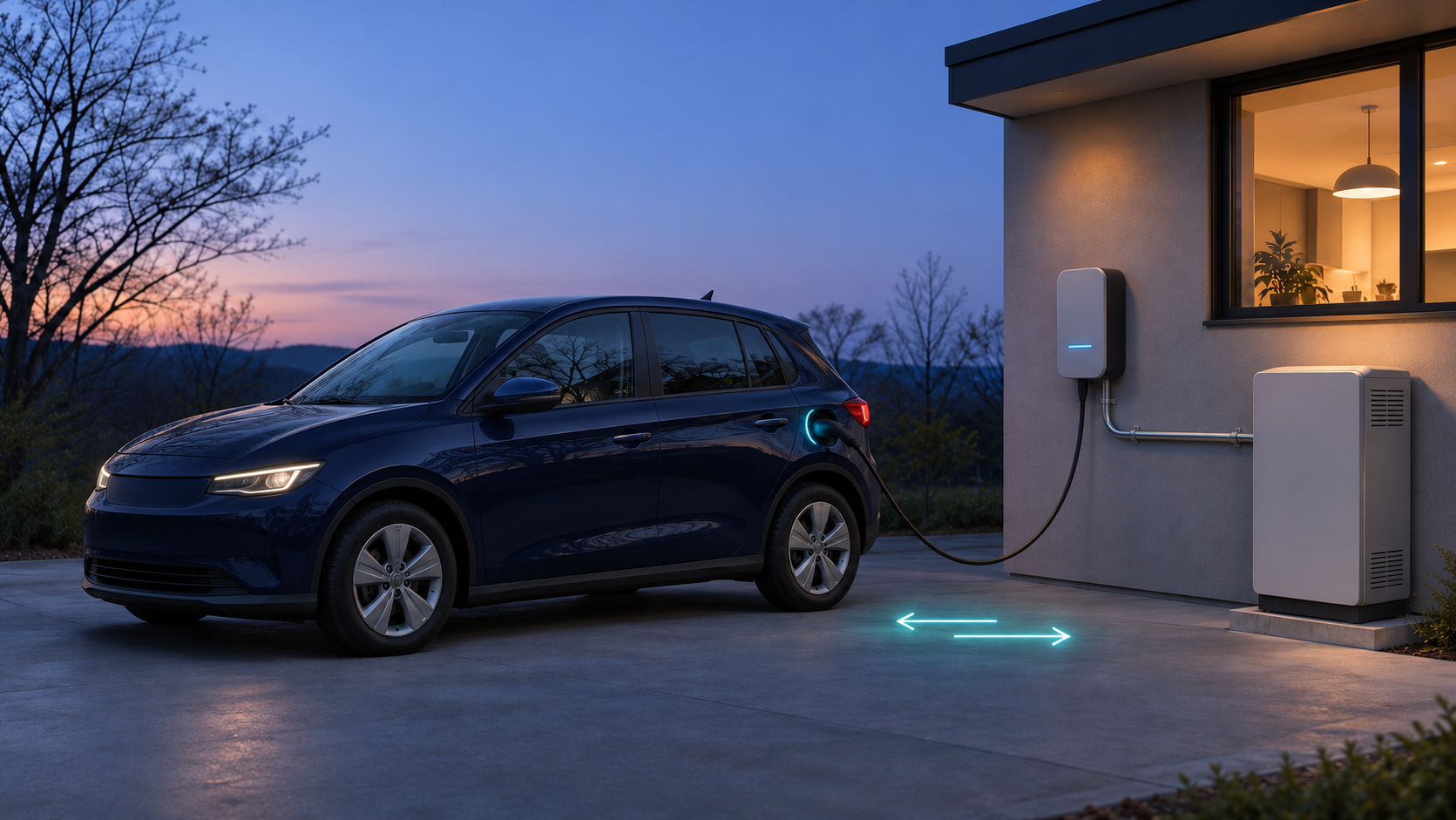
Bidirectional charging enables electric vehicles (EVs) to draw power from and return electricity to the grid, offering new possibilities for managing energy demand and supporting charging infrastructure.
One way or another, energy storage will need to be deployed. Whether it’s stationary storage or the vehicles themselves, it’s an amazing value proposition for everyone involved. Instead of utilities spending capital on stationary batteries, they can use the cars. Drivers can get subsidized electricity by allowing utilities to tap into their vehicles. It’s a win-win across the board.
We think it’s a necessity. Certain states are legislating it next year, and most states by 2029, for wired and wireless charging. It’s also not only for passenger vehicles but also for long-haul, heavy-duty vehicles. Wireless bidirectional charging, stationary and in motion, will be especially impactful. Being able to tap into the grid while in motion will allow for much smaller batteries and lower-cost equipment.
It’s a lift, though. A lot of the equipment out there, such as transformers and inverters, needs to be adapted to have functional V2G.
How does designing infrastructure for fleet charging differ from conventional public charging sites, when vehicles have predictable dwell times?
It’s a world of difference. With public charging, there are no set times when someone comes to charge and no scheduling. It’s potluck. Someone drives by, needs to fill up their vehicle, and goes to that charging station.
A fleet deployment is a whole different ballgame. You know which vehicles are there, what type they are, their battery sizes, and when they need to charge. You can design the entire deployment based on that knowledge.
Public charging is like throwing darts at a board. With a fleet, you know exactly when vehicles need to be charged, which makes for a much simpler deployment.
If wireless charging becomes more widely deployed, what would need to be engineered differently from today’s plug-in charging sites?
I filed our first wireless charging patent in 2012, so we were a little ahead on wireless charging.
When it comes to convenience, there’s no comparison. Most people don’t realize the issues with cords. If you search for EV charging cord theft, you’ll see people all over the world cutting these cords and selling them.
Ultimately, wireless charging is the future. The Tesla Cybercab that was just previewed is charged only through wireless charging. The new Porsche Cayenne SUV and coupe have wireless charging capabilities. Every auto manufacturer today has wireless charging in its R&D lab and production schedule.
What’s exciting is that we’re not only talking about stationary wireless charging but also in-motion wireless charging. Imagine driving down the road, moving into a certain lane, and charging as you drive. That’s the future of EV charging. If you have an EV with wireless charging and you pull into a parking lot that offers wireless and wired charging, I’d say 99% of people will never plug their vehicle in.
All the protocols have been developed. Instead of dealing with a credit card or billing system, the vehicle’s telematics systems will communicate with the charging network wirelessly, even in motion, to provision the charging session.
This isn’t technology in the lab. It’s being tested in the real world today, and it works well. Electreon, a company based in Israel, is a leader in this space. I’ve met with them, and their technology works.
It also goes beyond passenger vehicles to forklifts, robotics, and androids. Imagine the androids now being previewed by Tesla and others with charging pads on their feet, charging as they walk. As we light up roads, sidewalks, and other areas, we’ll see vehicles with 95% uptime or better.
Wireless charging will also considerably reduce vehicle costs. You need a much smaller battery when you can constantly charge a vehicle or piece of equipment wirelessly, and reducing battery size and weight improves efficiency. It’s a game changer.
In the future, wireless power will go even further. We’ll see a panel on a wall with one transmitter in the room, and all the equipment, from phones to appliances, TVs, and computers, will have receivers and won’t need to be plugged in.
How far can engineers realistically future-proof a charging site when vehicle power requirements are still changing?
I don’t think you can realistically future-proof a charging site by trying to predict what will happen with vehicle technology 10 or 15 years from now. I’ve been in the EV charging business since 2008, and we were one of the first charging service companies globally. What we saw then and what we see today are totally different worlds.
No one in the United States thought Tesla’s North American Charging Standard (NACS) would become the standard. Never in my wildest dreams did we think of 600-kW or 1-MW chargers. When EVs first came out, the initial concept was plugging them into the wall, with charging that would take days. No one imagined charging this fast when the first vehicle electrification programs were enacted under the Bush administration, with funding given out under Obama.
No one thought charging would be equivalent to filling up a gasoline tank. But we’re seeing that now in China, and vehicles with those capabilities are being released here in the United States.
So it’s important to understand where we are today and future-proof things as best we can, but there’s no real way to do that. What’s most important is energy generation. The biggest shortcoming for mass EV deployment is making sure there’s charging everywhere, whether you’re going to the movies, a restaurant, or school. If charging infrastructure is available in those locations, we’ll have a massive uptake of EVs. But planning 10 to 15 years in advance is a difficult thing to do.
How do you think AI is impacting, or will impact, future charging infrastructure?
I think AI is really going to impact how we transport ourselves. I’m at a conference at Florida International University (FIU) right now. I got into my Tesla, pressed a couple of buttons, and I didn’t drive here. That’s applying AI to the real world.
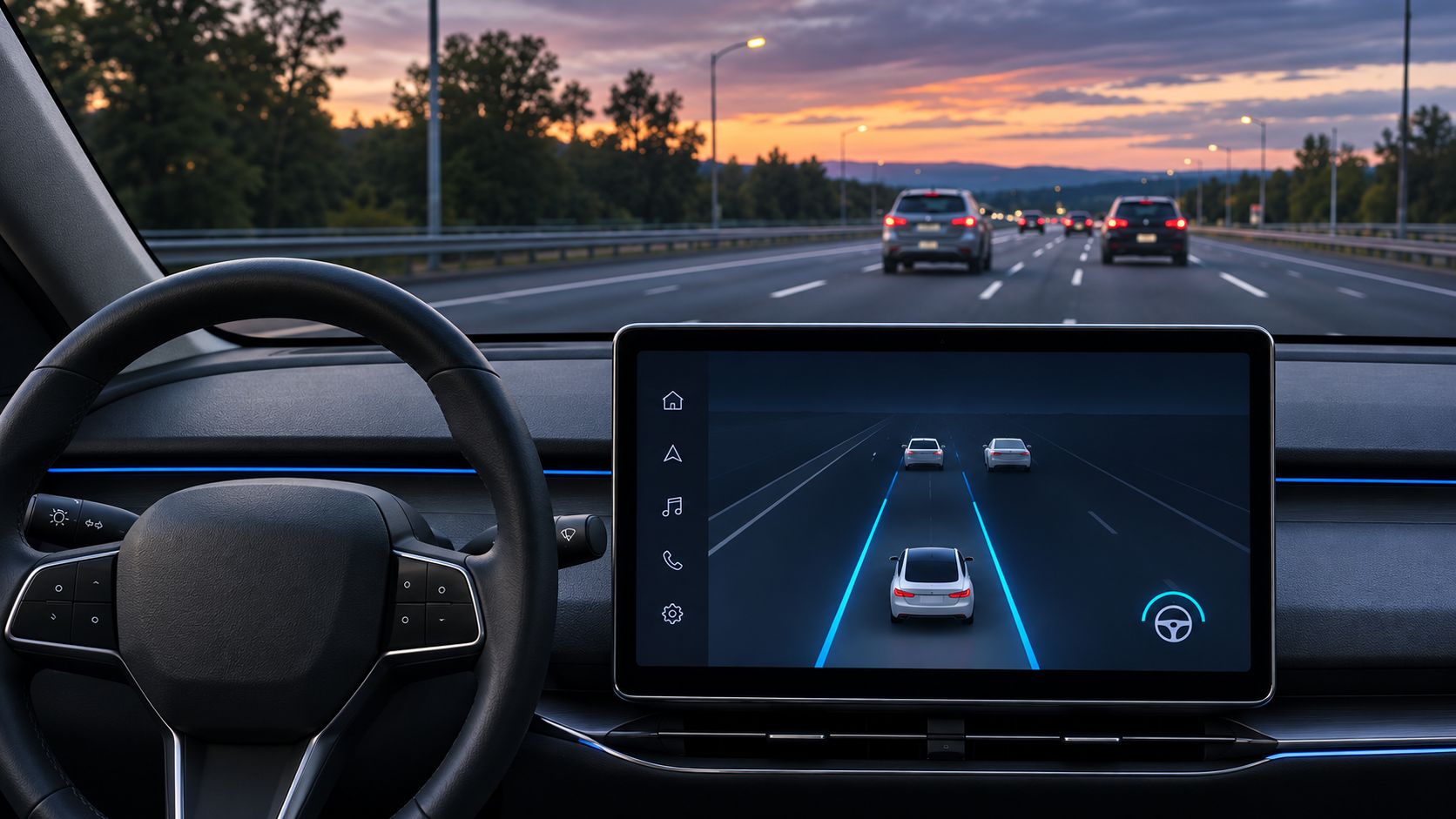
AI-powered autonomous driving systems use sensor data and software to detect surrounding vehicles, monitor road conditions, and support automated driving functions.
I think most people won’t be driving their cars in the future, and most cars will be autonomous. With autonomous cars, you don’t want human intervention in the process, whether it’s driving or fueling. So I believe most charging will be done wirelessly, and vehicles will take care of charging themselves. AI will remove human intervention from that process.
Is there anything else you think is important for readers to know?
The most important thing is that industry, academia, and government work together on energy generation. It’s a big issue. Storage is good, and bidirectional capabilities are good. These are all great technologies. But we don’t have enough energy being produced, especially as we become more technologically advanced and add more functionality to our lives. We need a lot more energy generation right now.
The biggest problem is that many people want to invest in energy generation, but there’s a big issue with interconnection and getting those projects online. It’s important for all of us to contact our local politicians and public utility commissions and put as much pressure as we can on adding energy generation. The more generation we have, the lower the cost of electricity will be. Then we’ll have all this functionality, not only in EV charging and transportation but in every aspect of our lives.
I want to add one more thing. I was in China a few months ago, and one thing really amazed me. When you look around, you see massive amounts of coiled copper or fiber on every utility pole. They’re looking not at today’s needs but at where they’ll be in 10, 20, and 30 years. We need to adopt that mindset here in the U.S. We can’t only focus on where we are today. We need to focus on where things are going. If we start deploying infrastructure like that, we’ll have low-cost, resilient, efficient energy that benefits everyone.
Filed Under: Charging, Featured Contributions, Q&As, Vehicle-to-Grid (V2G), Wireless charging