EV Engineering & Infrastructure

  • News
  • Articles
    • Q&As
    • Tech Spotlight
  • Batteries
  • Charging
    • Wireless Charging
    • Vehicle-to-Grid (V2G)
  • Electrification
  • Testing and Safety
  • Learn
    • Learning Center
    • Tech Toolboxes
    • Webinars
  • Resources
    • Digital Editions
    • Diversity & Inclusion
    • Voices
  • Advertise
  • Subscribe

Headless load management coordinates EV chargers across multiple backend platforms

By Michelle Froese | October 1, 2026

FLEXECHARGE is deploying its HARMON-E load-management technology across 1,000 Circle K electric vehicle (EV) charge points using a headless architecture that integrates directly with the operator’s existing energy-management systems.
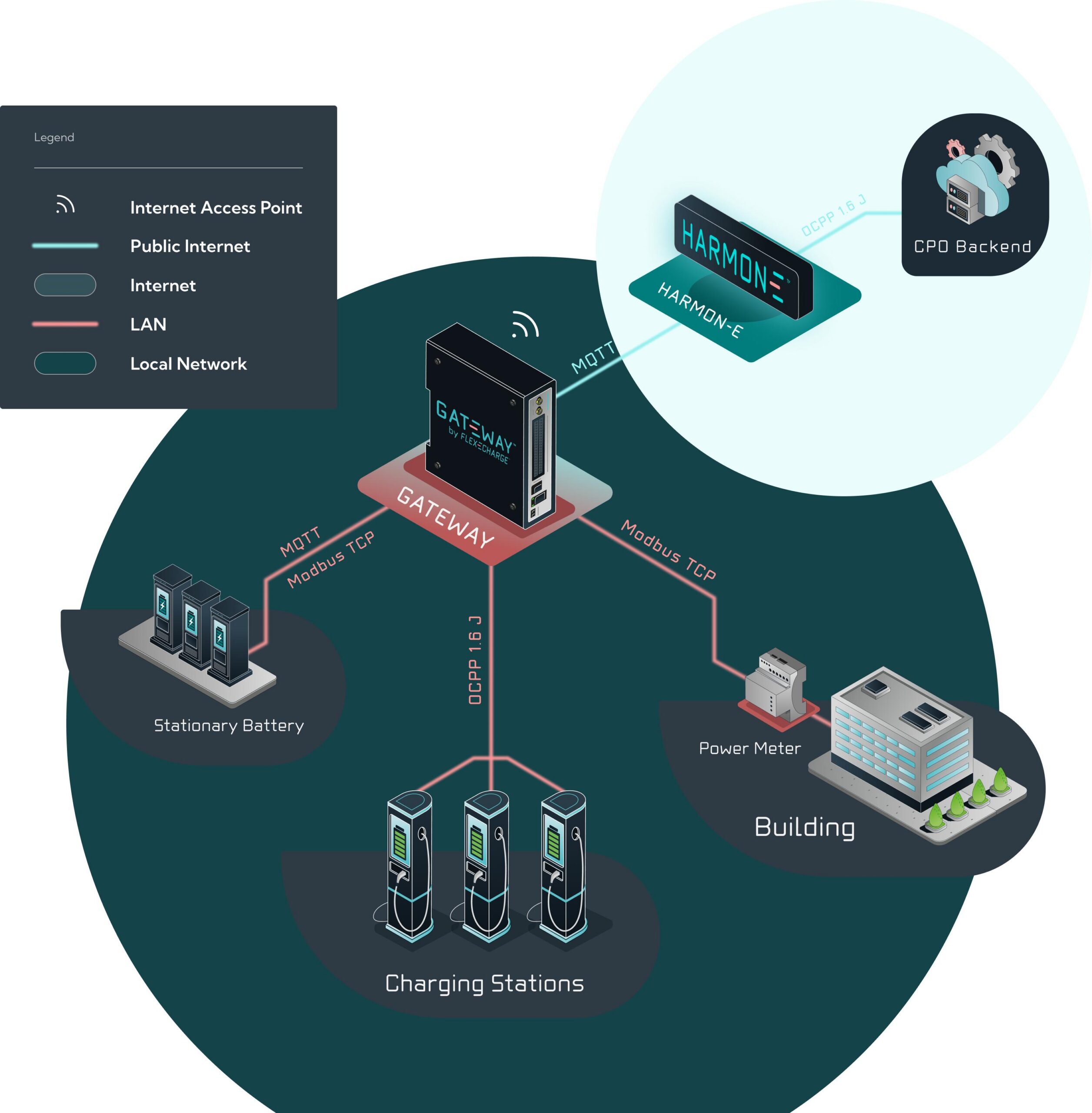
Rather than introducing an additional operational interface, FLEXECHARGE delivers the load-management functionality and data into Circle K’s existing systems and dashboards through APIs.

The approach allows the charging operator to retain its existing technology environment and workflows while using FLEXECHARGE for load management.

The system distributes available site capacity between active charging sessions while maintaining a configured site power limit. As charging demand changes, available capacity can be dynamically reassigned between vehicles.

The headless architecture is designed for charge point operators that already have internal platforms and want to integrate energy-management functionality directly into their existing technology stack rather than operate a separate interface.

According to FLEXECHARGE, the deployment is the first use of its headless HARMON-E system at this scale.

You might also like


Filed Under: Charging, Technology News
Tagged With: charging, flexecharge
 

Next Article

← Previous Article
Next Article →


“ee
EXPAND YOUR KNOWLEDGE AND STAY CONNECTED
Get the latest info on technologies, tools and strategies for EV professionals.

Tech Spotlight

  • Why high-power EV charging is pushing control integration into one ECU
  • Designing safety into the cell: The case for system-level solid-state batteries
More Tech Spotlight

Featured Contributions

  • How does fault-tolerant control keep an EV operating after a sensor failure?
  • Q&A: How EV architectures are changing high-speed connectivity
  • How to catch EV faults before they become failures
  • How do busbar design and stray inductance affect EV power electronics?
  • Q&A: How do battery-pack design choices affect EV assembly?
More Featured Contributions

EV TECH TOOLBOX

“ee
Explore the EV Engineering Tech Toolboxes: a collection of high-impact articles that break down the latest EV design trends and technologies. Download to stay aligned with today’s evolving EV design challenges.

Learning Center

EE Learning Center

Sponsored Content

  • Converting custom materials for EV applications
  • Advantech Powers Versatile Electric Vehicle Charging Systems

EV Training Days

ev
Q&A
EV Engineering & Infrastructure
  • 5G Technology
  • Analog IC Tips
  • Battery Power Tips
  • Connector Tips
  • EDABoard Forums
  • Electro-Tech-Online Forums
  • Engineer’s Garage
  • Microcontroller Tips
  • Power Electronic Tips
  • Sensor Tips
  • Test and Measurement Tips
  • Contact Us

Copyright © 2026 Arrowfly LLC. All Rights Reserved. The material on this site may not be reproduced, distributed, transmitted, cached or otherwise used, except with the prior written permission of Arrowfly
Privacy Policy | Advertising | About Us

Search EV Engineering & Infrastructure

  • News
  • Articles
    • Q&As
    • Tech Spotlight
  • Batteries
  • Charging
    • Wireless Charging
    • Vehicle-to-Grid (V2G)
  • Electrification
  • Testing and Safety
  • Learn
    • Learning Center
    • Tech Toolboxes
    • Webinars
  • Resources
    • Digital Editions
    • Diversity & Inclusion
    • Voices
  • Advertise
  • Subscribe