Researchers at the Fraunhofer Institute for Manufacturing Technology and Advanced Materials (IFAM) in Dresden, Germany, are developing manufacturing technologies for electric motors that reduce dependence on rare-earth elements and copper.
 The SIREN project focuses on alternative motor architectures and materials that could be used in electric vehicle (EV) propulsion systems.
The project involves establishing a sinter-based additive manufacturing process that enables different metallic materials to be combined within complex motor components. This approach could expand design possibilities beyond those available through conventional manufacturing methods.
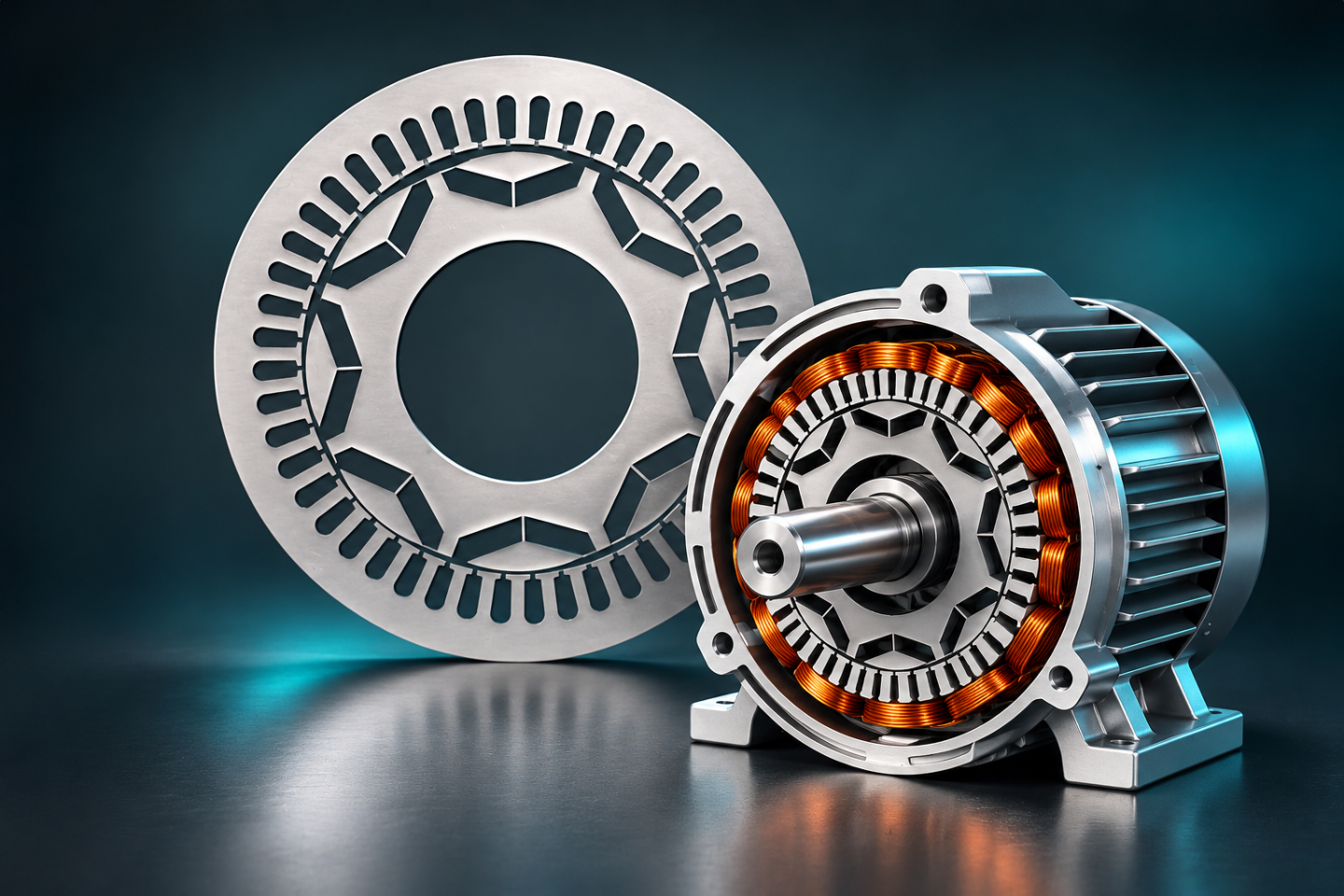
A central research area involves multi-material laminated stacks that combine soft magnetic and non-magnetic materials. These structures could enable high-speed reluctance motors and ferrite-based permanent magnet drives that operate without rare-earth magnets.
Researchers are also investigating aluminum as an alternative to copper in motor windings. The development includes integrating cooling channels into the aluminum windings to improve thermal management and enable their use in high-performance electric drives.
The manufacturing processes are intended for demanding mobility applications requiring compact motor designs and high power density. In addition to automotive propulsion, potential applications include aviation and marine electric drive systems.
Fraunhofer IFAM plans to establish a complete manufacturing process, from materials development through component production and functional motor demonstrators. The research infrastructure will also facilitate collaboration with industrial partners to evaluate future manufacturing applications.
The SIREN project has received more than €2 million in funding from the German state of Saxony and the European Union. Development of the research infrastructure is scheduled to continue through 2028.
Filed Under: Electric Motor, Technology News