Mercedes-Benz is developing a programmable power converter designed to manage energy flows at the individual battery-cell or cell-group level in future electric vehicles (EVs).
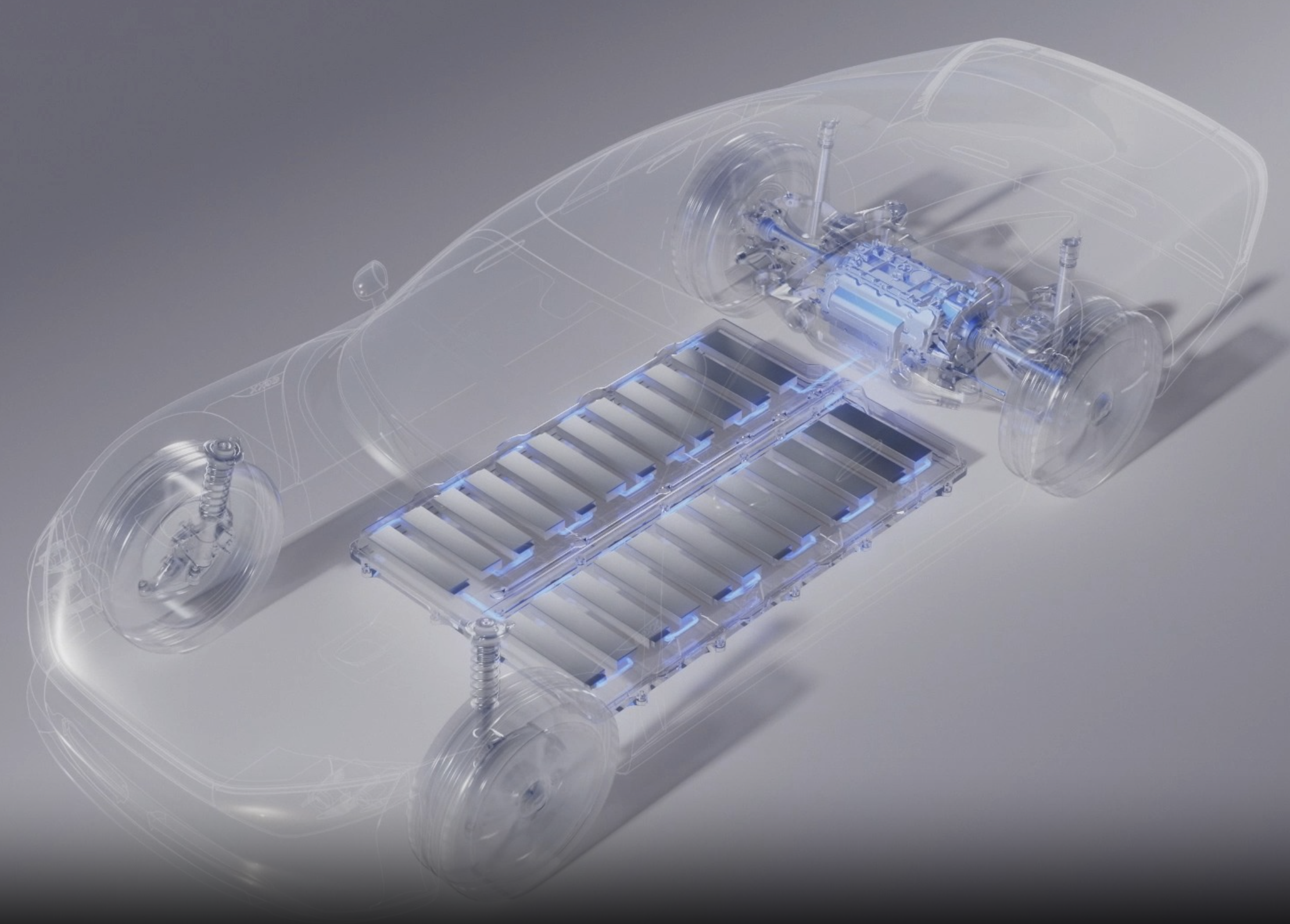 The technology uses software-controlled micro-converters to deliver a stable high-voltage output of up to 800 V, regardless of differences in cell state of charge or ageing.
Unlike conventional battery architectures, in which pack voltage is closely linked to the number of cells connected in series, the proposed system uses decentralized power converters to regulate voltage electronically.
Multiple converters can operate in parallel, allowing output capacity to be adapted to different applications while providing greater flexibility in battery configuration.
Mercedes-Benz says the technology could enable more compact and flexible battery and power-electronics designs. Potential applications include ac/dc conversion and bidirectional charging, with several functions integrated into a common hardware architecture.
The current development-stage converter delivers up to 3 kW and operates with ac and dc applications. Further development would be required to scale the technology for higher-power EV systems.
Filed Under: Power Electronics, Technology News