EV Engineering & Infrastructure

  • News
  • Articles
    • Q&As
    • Tech Spotlight
  • Batteries
  • Charging
    • Wireless Charging
    • Vehicle-to-Grid (V2G)
  • Electrification
  • Testing and Safety
  • Learn
    • Learning Center
    • Tech Toolboxes
    • Webinars
  • Resources
    • Digital Editions
    • Diversity & Inclusion
    • Voices
  • Advertise
  • Subscribe

Fast-charging system reaches 750 kW with shared power

By Michelle Froese | September 30, 2026

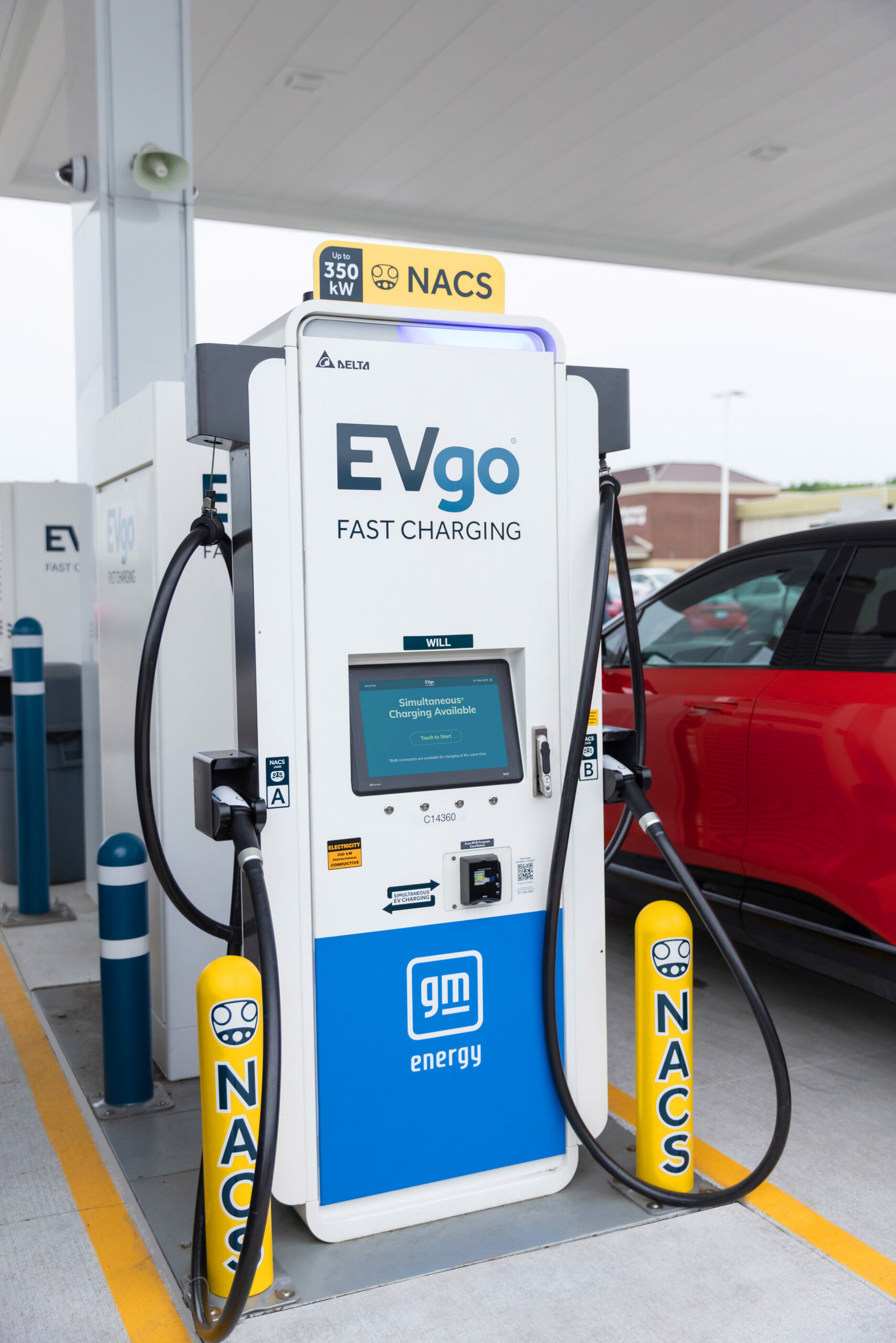
EVgo has previewed a new fast-charging system capable of delivering up to 750 kW. The architecture is being designed, developed, and tested at the company’s Innovation Lab in El Segundo, California, with support from Delta Electronics.

The system will use dynamic power sharing to adjust energy distribution in real time based on the charging needs of each vehicle. This allows each dispenser to provide the required output throughout a charging session rather than assigning fixed power levels to individual stalls.

Each station will also feature NACS connectors. EVgo expects the system to charge the fastest-charging vehicles currently available in the US in about 10 minutes, depending on factors such as vehicle capability, battery condition, ambient temperature, and state of charge.

The charger design also includes updated cable handling, a touchless payment interface, and new hardware and firmware intended to improve reliability and simplify the charging process.

EVgo says dynamic power sharing can also help manage site demand by directing power where it is needed and reducing demand spikes.

The final charger design is expected to be unveiled in 2027, when EVgo plans to begin deploying the new architecture.


You might also like


Filed Under: Charging, Technology News
Tagged With: charging, evgo
 

Next Article

← Previous Article
Next Article →


“ee
EXPAND YOUR KNOWLEDGE AND STAY CONNECTED
Get the latest info on technologies, tools and strategies for EV professionals.

Tech Spotlight

  • Why high-power EV charging is pushing control integration into one ECU
  • Designing safety into the cell: The case for system-level solid-state batteries
More Tech Spotlight

Featured Contributions

  • How does fault-tolerant control keep an EV operating after a sensor failure?
  • Q&A: How EV architectures are changing high-speed connectivity
  • How to catch EV faults before they become failures
  • How do busbar design and stray inductance affect EV power electronics?
  • Q&A: How do battery-pack design choices affect EV assembly?
More Featured Contributions

EV TECH TOOLBOX

“ee
Explore the EV Engineering Tech Toolboxes: a collection of high-impact articles that break down the latest EV design trends and technologies. Download to stay aligned with today’s evolving EV design challenges.

Learning Center

EE Learning Center

Sponsored Content

  • Converting custom materials for EV applications
  • Advantech Powers Versatile Electric Vehicle Charging Systems

EV Training Days

ev
Q&A
EV Engineering & Infrastructure
  • 5G Technology
  • Analog IC Tips
  • Battery Power Tips
  • Connector Tips
  • EDABoard Forums
  • Electro-Tech-Online Forums
  • Engineer’s Garage
  • Microcontroller Tips
  • Power Electronic Tips
  • Sensor Tips
  • Test and Measurement Tips
  • Contact Us

Copyright © 2026 Arrowfly LLC. All Rights Reserved. The material on this site may not be reproduced, distributed, transmitted, cached or otherwise used, except with the prior written permission of Arrowfly
Privacy Policy | Advertising | About Us

Search EV Engineering & Infrastructure

  • News
  • Articles
    • Q&As
    • Tech Spotlight
  • Batteries
  • Charging
    • Wireless Charging
    • Vehicle-to-Grid (V2G)
  • Electrification
  • Testing and Safety
  • Learn
    • Learning Center
    • Tech Toolboxes
    • Webinars
  • Resources
    • Digital Editions
    • Diversity & Inclusion
    • Voices
  • Advertise
  • Subscribe