Addionics has reported a 3.5-fold improvement in lithium-ion battery cycle life using its 3D porous current collector technology, based on testing conducted at Avrion Battery Labs. The results highlight the potential to reduce battery degradation in applications requiring frequent charging and discharging, including autonomous electric vehicles (EVs) and commercial fleets.
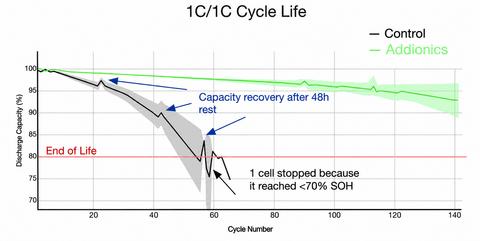 The study compared 18650 cylindrical cells incorporating Addionics’ 3D porous current collectors with reference cells using conventional current collectors.
Both groups used NMC811 cathodes and graphite anodes and were tested at 25°C under continuous 1C charging and discharging conditions. Cells incorporating the 3D architecture completed approximately 3.5 times as many cycles before reaching 80% state of health.
The testing also identified differences in capacity recovery during rest periods. Addionics-equipped cells recovered in less than two hours initially and less than 12 hours by cycle 200, while reference cells required more than 48 hours after the first 20 cycles.
The improvements are attributed to the porous architecture, which creates pathways for electrolyte and salt redistribution between electrode layers. Conventional solid metal current collectors restrict this movement, potentially contributing to uneven salt concentrations, increased resistance, and capacity loss during sustained cycling.
Avrion conducted the testing using ultra-high precision coulometry and electrochemical impedance measurements to evaluate cycling performance and resistance. Although the results are consistent with improved electrolyte transport, direct measurements of salt distribution are planned to further validate the proposed mechanism.
For EV applications, the findings suggest potential benefits for battery longevity and vehicle uptime, particularly in high-utilization fleets where charging cycles are frequent and opportunities for extended rest are limited. Further testing in larger cell formats and under different operating conditions will be needed to establish how the improvements translate to commercial battery systems.
Filed Under: Batteries, Technology News, Testing and Safety