HEVO and researchers at Purdue University have announced a technical partnership to develop wireless charging technology that supports stationary, dynamic, and bidirectional power transfer through a common vehicle architecture for electric vehicles (EVs).
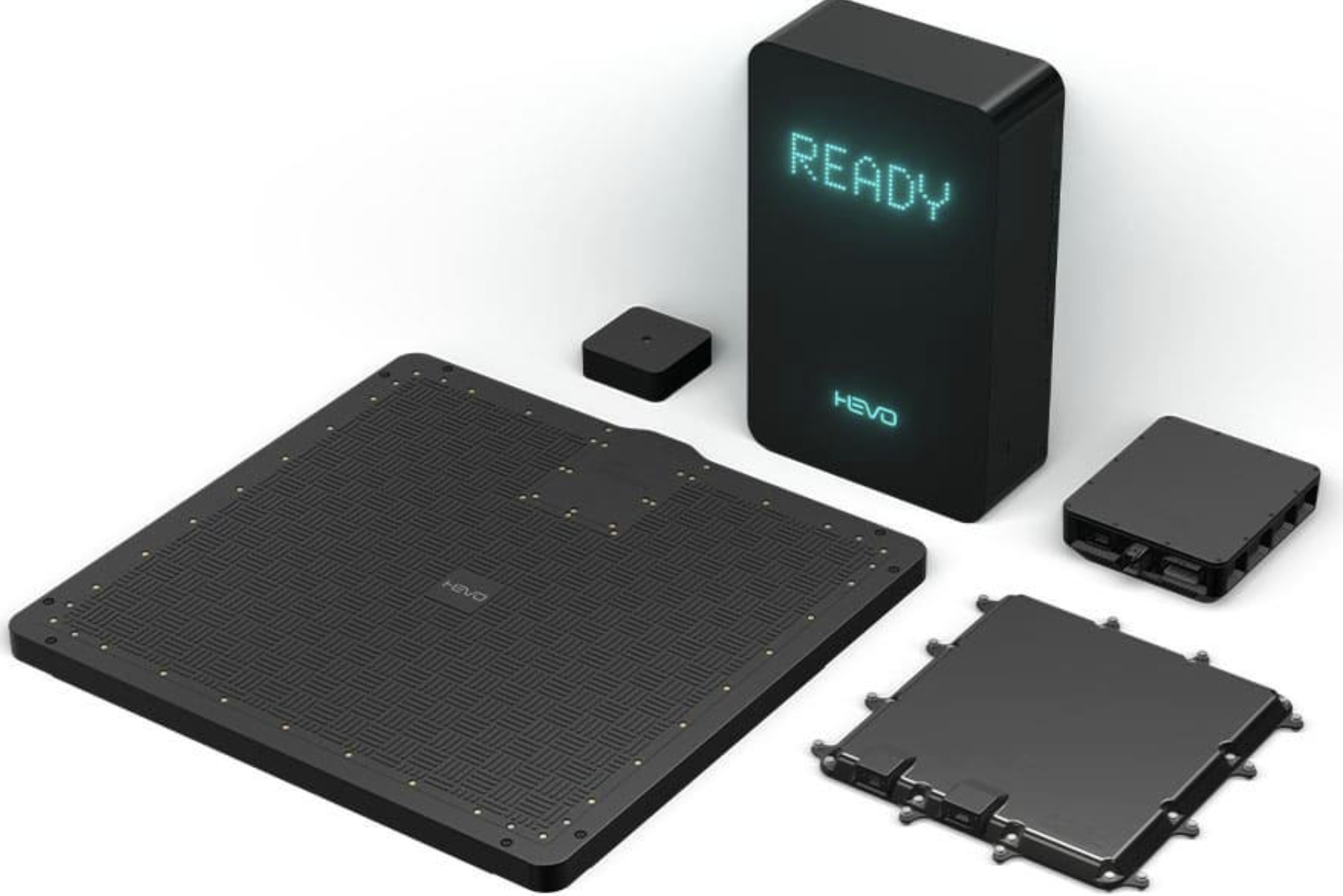 The collaboration will focus on evaluating and validating systems that allow EVs to charge wirelessly while parked or in motion, with the added capability of transferring power bidirectionally. The goal is to develop an interoperable architecture that can accommodate different charging environments without requiring separate vehicle-side systems.
The partners plan to demonstrate the technology and establish a path toward commercialization within relevant SAE standards. Potential applications include fleet depots and electrified roadways.
The announcement builds on Purdue’s previous research into dynamic wireless power transfer. Researchers recently demonstrated wireless charging of a Class 8 electric truck on a quarter-mile test roadway in West Lafayette, Indiana.
During that demonstration, the system delivered 190 kW of power to the truck while it traveled at 65 mph. Transmitter coils embedded in the pavement transferred energy to a receiver assembly mounted beneath the vehicle.
“Purdue’s research has demonstrated the effectiveness of dynamic wireless power transfer to deliver power efficiently to vehicles while they are in motion,” said Nadia Gkritza, a Purdue professor and one of the project’s lead researchers.
The partnership will explore how stationary, dynamic, and bidirectional charging can operate within a unified vehicle architecture. No timeline for commercialization or performance targets for the combined system have been announced.
Filed Under: Charging, Technology News, Wireless charging