ChargerHelp has released its 2026 EV Charging Reliability Report, analyzing approximately 500 million data points to examine how electric vehicle (EV) charging systems fail, how long they remain offline, and what factors affect recovery.
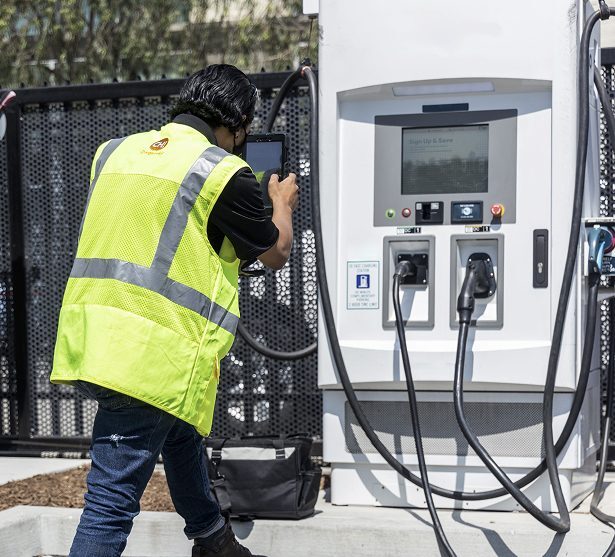 The report focuses increasingly on commercial fleets, ports, and autonomous vehicle operators, where charger availability can directly affect vehicle uptime. ChargerHelp found that some of the longest outages are associated with delays in diagnosing faults and coordinating repairs rather than the physical repair itself.
Charging issues requiring multiple work orders took a median of 32 days to resolve, compared with seven days for issues completed during a single service visit.
“These are connected assets, and getting someone on site in two hours does not mean the problem is solved. Without the right data, permissions, manufacturer support or parts, a charger can still be down for days,” said Kameale Terry, CEO of ChargerHelp.
The analysis combines communications between chargers and charging management systems with anonymized operational data, technician observations, repair histories, network analysis, and industry case studies.
Key findings include:
- Diagnostics can account for a significant portion of downtime. For common charging faults resolved during a single field visit, about half of the recovery time occurred before a technician was dispatched.
- Repeat service visits extend charger outages. Issues requiring multiple work orders had a median resolution time of 32 days, compared with seven days for single-visit repairs.
- Access to charger data affects recovery. Diagnostic visibility and access to operational information can influence how quickly technicians identify the source of a failure.
- Older charging equipment is becoming a larger maintenance consideration. The report found that 37.6% of US charging ports are at least three years old, while typical warranties range from two to five years.
- Mean Time to Repair depends on more than technician response. ChargerHelp identifies remote diagnostics, asset-health data, parts availability, and coordination between charger manufacturers, network operators, software providers, utilities, and service organizations as factors affecting recovery time.
The report also examines the shift from basic charger uptime measurements toward more detailed monitoring of asset health and fault recovery. ChargerHelp said improved operational data can help identify recurring failures and determine whether problems originate in charging hardware, software, communications, or supporting infrastructure.
As charging systems become more connected to distributed energy resources and other energy-management systems, the report argues that diagnostics and system-level visibility will become increasingly important for maintaining charger availability.
“When public charging was new, low reliability was largely a growing pain of a new technology. That explanation is expiring,” said Professor Gil Tal, director, Electric Vehicle Research Center, Institute of Transportation Studies, UC Davis. “For the next wave of drivers and fleet operators, reliability is no longer just a metric but a requirement. Our research at UC Davis shows that public charging reliability has no simple owner. This report reveals that recovery is a coordination problem, not a repair problem. It shows the industry exactly where the time goes when a charger fails, and crucially, how to give that time back.”
This is ChargerHelp’s fourth annual EV Charging Reliability Report.
Filed Under: Charging, Technology News