A connector that physically fits an electric vehicle (EV) inlet does not guarantee a safe, successful charging session. Electrical or communication differences can halt energy transfers, while backend issues may prevent authorization or transaction processing.
This article explains how engineers validate interoperability between electric vehicles (EVs) and electric vehicle supply equipment (EVSE) across the complete charging path.
From conformance to end-to-end validation
Interoperability testing follows three stages:
- Conformance evaluates an EV or EVSE against a defined specification and test suite using a reference tester or protocol simulator.
- Cross-vendor interoperability pairs a production or preproduction EV with a target charger to verify compatibility under the tested conditions.
- End-to-end validation traces a complete session through the operator backend and roaming services to confirm successful authorization and billing.
As shown in Figure 1, conformance testing may use specialized equipment that emulates the EV or EVSE.
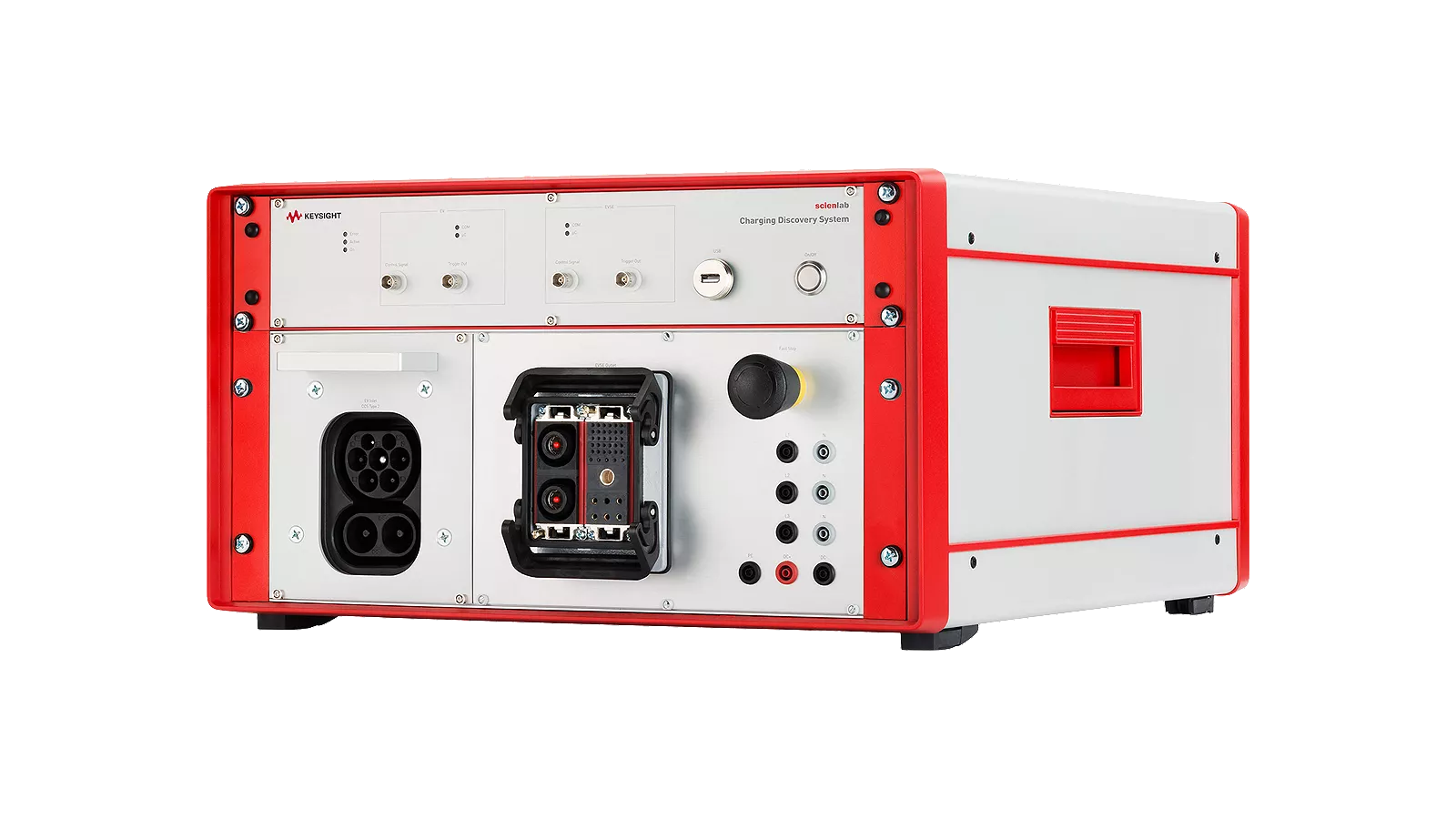
Figure 1. The SL1040A Scienlab Charging Discovery System supports EV and EVSE emulation for alternating current (ac) and direct current (dc) charging-interface tests. (Image: Keysight Technologies)
Reference systems, such as CharIN’s Conformance Test System, establish a common baseline for evaluating Combined Charging System (CCS) vehicles and chargers.
However, applicable standards permit a wide range of optional features and implementation choices, including support for different protocol versions and Plug & Charge capabilities.
EVs and chargers may also handle timeouts and error recovery differently. Because testing every possible combination is unrealistic, labs prioritize the most common EV-EVSE pairings in a target region.
Table 1 expands the test matrix to cover charging methods and regional interface differences.
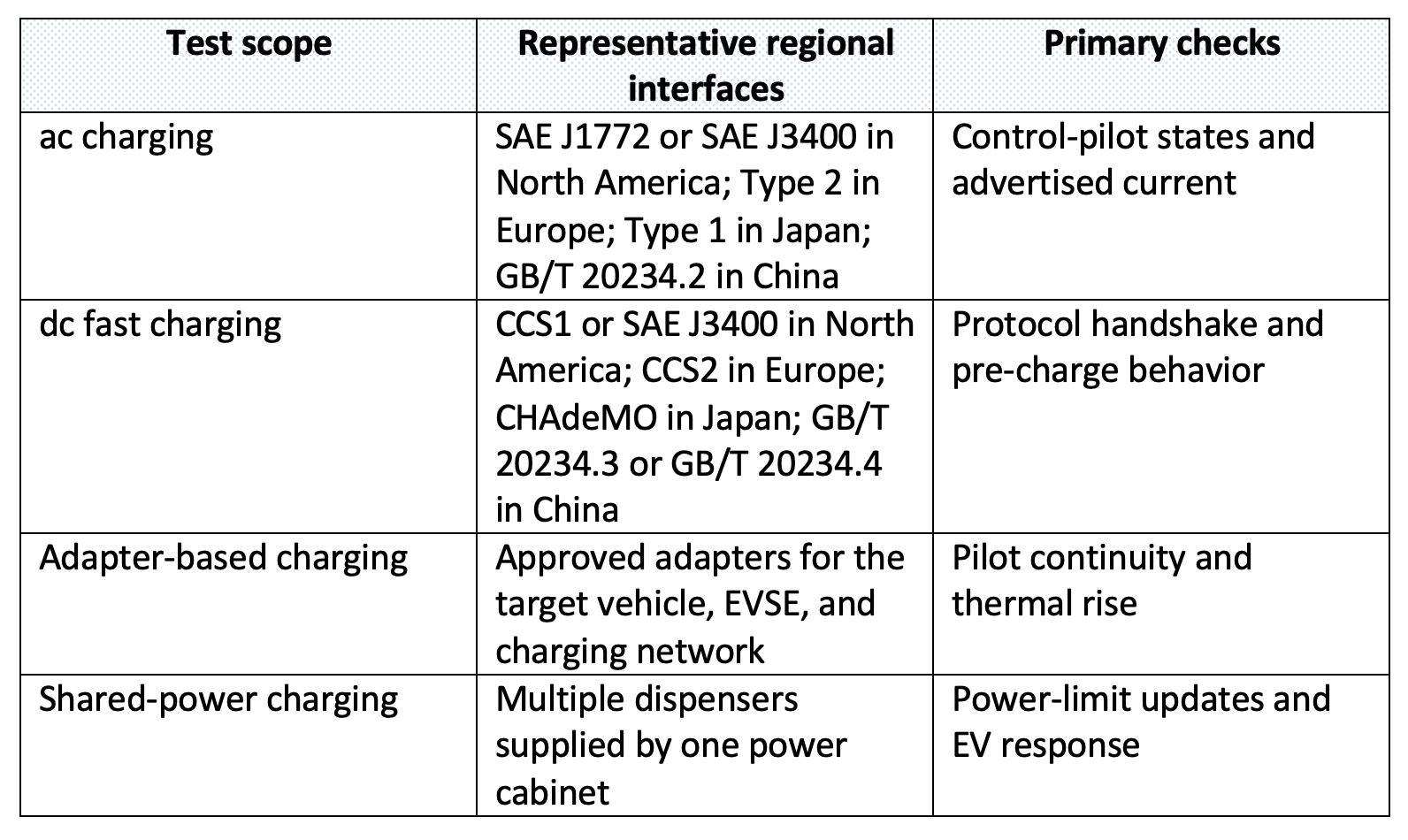
Table 1. Primary interoperability checks for regional charging interfaces and configurations.
Validating the complete dc charging sequence
After selecting EV-EVSE pairings, labs evaluate the electrical and communication states in each dc fast-charging session. Once the connector is attached and control-pilot signaling begins, the vehicle and charger establish high-level communication, typically over power-line communication (PLC) in CCS systems.
Cross-vendor testing connects an actual EV and EVSE, while a mobile analyzer records their interaction, as shown in Figure 2.

Figure 2. The comemso EVCA interop system records and decodes a CCS charging session between an EV and an EVSE. (Image: comemso electronics GmbH)
It places decoded protocol messages and electrical measurements on a synchronized timeline, allowing engineers to compare the battery management system (BMS) request with the charger’s response. The resulting operating point must remain within the charger’s operating envelope and cable rating. Precharge is critical because excessive voltage mismatch when the contactors close can produce damaging inrush current.
Before the vehicle closes its high-voltage contactors, the charger brings the dc bus toward pack voltage under controlled conditions. Test programs simulate an implausible voltage reading, an insulation fault, or a welded contactor to confirm that the system aborts safely and records a diagnosable fault.
Cable reconnection and communication dropout require separate recovery tests. Labs also repeat the sequence after rebooting the vehicle or charger; a passing result confirms that the system recovers safely and returns to a usable state.
Plug & Charge: protocol to backend
Plug & Charge extends interoperability testing to backend services. It leverages ISO 15118 to authorize a charging session without requiring the driver to use a radio-frequency identification (RFID) card or an app. Instead, the EV and charger establish a Transport Layer Security (TLS) connection over which the vehicle presents a contract certificate for validation.
Protocol conformance verifies the ISO 15118 exchange, including TLS setup and certificate handling. End-to-end validation follows the authorization request through the operator’s backend and any roaming service to confirm that the session is authorized and billed to the correct account. Both layers are necessary because a certificate can pass the protocol checks yet fail authorization in the operator’s backend or a roaming service.
Plug & Charge tests confirm that expired and revoked certificates generate a controlled denial. Because authorization also depends on backend availability, engineers interrupt connectivity at different points in the process, monitoring whether the system ends the attempt cleanly or offers an alternative authorization method.
Failures that conformance testing misses
Some failures appear only in a particular EV-charger pairing. The vehicle and charger may handle timeouts or retries differently or fail to select a common protocol version during the transition from DIN SPEC 70121 and ISO 15118-2 to ISO 15118-20.
Shared power introduces another potential failure point because a single-pair conformance test does not exercise charger-specific allocation logic across multiple sessions. Starting a second session on the same power cabinet verifies that the first EV responds correctly when its available power changes.
Beyond laboratory conformance testing, field pilots and cross-vendor events such as CharIN Testivals evaluate hardware and firmware combinations that a fixed laboratory matrix may miss.
Summary
EV charging interoperability depends on all three validation layers because no one layer covers the complete charging path. Conformance sets the baseline, while real-world EV-EVSE pairings identify timing and recovery problems that a reference system may miss. End-to-end validation then determines whether a technically successful charging session is also authorized and billed correctly.
References
- Considering Interoperability for Electric Vehicle Charging: A Commission Case Study, NIST
- Symposium on Federally Funded Research on Cybersecurity of Electric Vehicle Supply Equipment (EVSE), NIST
- ISO 15118: The Complete Guide for Charge Point Operators and eMobility Providers, Ampeco
- SAE J3400 Published as a Recommended Practice: What That Means for Industry, SAE
- SAE to Standardize Tesla NACS Charging Connector SAE-MA-07189, SAE
- Position Papers and Regulation, CHARIN
Related EE World content
- What is Electric Vehicle Supply Equipment (EVSE)?
- New MCS-ready EVSE and EV Test Platform
- Supporting CPOs With Verified EV Charging Interoperability
- Ensuring EV Charging Interoperability with OCPP 2.0.1 Certification
- How EV Charging Validation is Evolving for Megawatt Charging
Filed Under: FAQs, Featured Contributions