The Industrial Technology Research Institute (ITRI) and eJoule Inc. are collaborating to develop longer-life nickel-manganese-cobalt (NCM) lithium-ion batteries for electric vehicles (EVs) and other applications. The partnership combines eJoule’s single-crystal cathode materials with ITRI’s electrode manufacturing and cell engineering capabilities to support the transition from material development to commercial production.
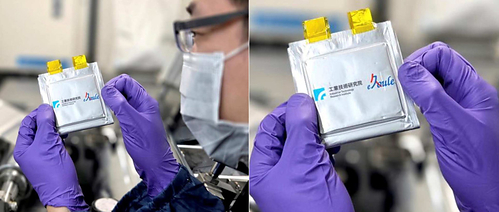 The collaboration focuses on medium- and high-nickel NCM cathodes, which offer high energy density for applications where battery weight and driving range are important considerations. The companies aim to improve cycle life while maintaining the performance advantages of nickel-rich battery chemistries.
According to the organizations, testing of eJoule’s single-crystal NCM cathode materials has demonstrated cycling stability and capacity retention over extended charge-discharge cycles, with cycle life approaching that of lithium iron phosphate (LFP) batteries. The materials are also reported to offer improved safety compared with conventional NCM cathodes.
ITRI will develop cell specifications and capacities using eJoule’s cathode materials, with an emphasis on optimizing charge-discharge rate capability and cycle life. This work is intended to connect material-level characteristics with cell performance for EV batteries and other demanding applications.
A key part of eJoule’s technology is its proprietary Dynamic Crystallization Process (DCP), which produces single-crystal cathode active materials directly from solution droplets, eliminating the conventional precursor cathode active material (pCAM) production stage.
The manufacturing process is designed to reduce processing steps and associated waste while enabling control over chemical composition, dopant distribution and particle crystallinity. These characteristics can influence the performance and stability of NCM battery materials.
Beyond EVs, the collaboration targets applications in drones, autonomous robotics and energy storage systems. The organizations plan to continue development from cathode materials through electrode fabrication and cell manufacturing to support eventual commercialization.
Filed Under: Batteries, Technology News