CATL introduced its TECTRANS II commercial vehicle battery platform this week at IAA Transportation 2026, taking place September 14 to 20 in Hanover, Germany. The modular system is designed for battery-electric commercial vehicles and supports multiple vehicle architectures, energy requirements, and charging strategies.
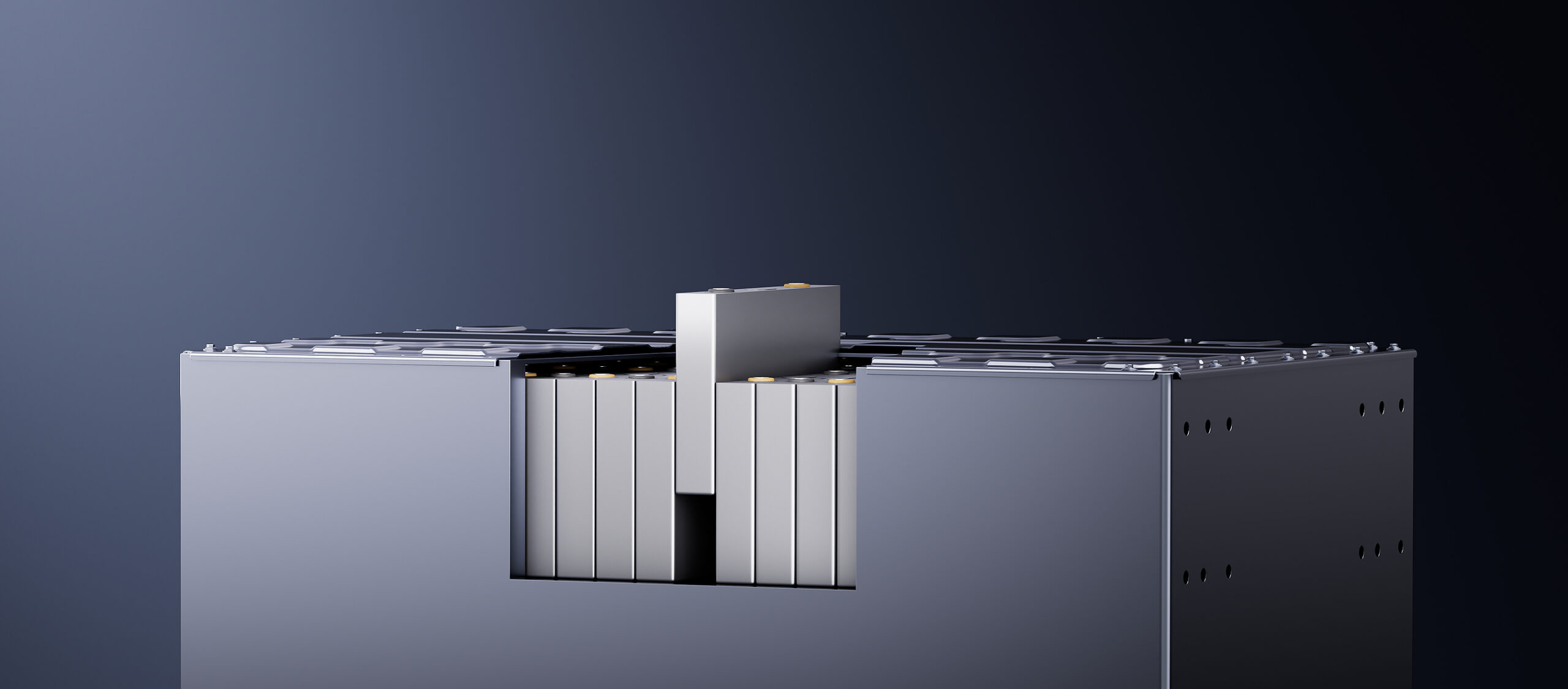 TECTRANS II uses standardized battery packs that can be configured in different quantities to match vehicle energy and payload requirements. CATL says the highest-capacity configuration can support driving ranges of up to 1,000 km.
The platform is compatible with both e-axle and central-drive architectures and supports conventional charging as well as battery swapping. CATL has standardized the external dimensions, electrical interfaces, and communication protocols while allowing the internal battery technology and pack design to change over time. This approach is intended to let OEMs update battery technology without requiring major changes to the underlying vehicle platform.
The battery system has a gravimetric energy density of 170 Wh/kg. CATL says this can allow approximately 0.6 tonnes of additional payload compared with lower-energy-density battery systems of equivalent capacity.
TECTRANS II also supports megawatt-level fast charging, with CATL reporting charging to 80% in 25 minutes. A full-tab, low-impedance cell design is used to achieve a claimed system round-trip efficiency of 96%.
For heavy-duty truck applications, the battery is engineered for a service life of 12 years or 1.5 million km, with 70% capacity retention.
The battery enclosure includes a hot-formed steel upper cover, an impact-resistant bottom plate, and an extruded-aluminum structure with crush-resistant ribs. CATL rates the system for up to 1,000 J of bottom impact resistance and lateral crush loads of up to 250 kN. The enclosure is also designed for corrosion resistance over a 15-year period.
TECTRANS II uses a multi-branch battery management system architecture that can isolate a failed branch while allowing the remaining branches to continue supplying power. The system also incorporates insulation fault-location technology intended to distinguish between battery-related insulation faults and faults elsewhere in the vehicle.
CATL says the platform has undergone full-vehicle torsion and external fire testing as part of its validation program for commercial vehicle applications.
At IAA Transportation 2026, CATL also announced an agreement with DHL Group to develop electric freight corridors in Europe. The companies plan to work with vehicle manufacturers and other partners on purpose-built electric commercial vehicles and pilot deployments.
Filed Under: Batteries, Technology News