
Regenerative braking gives an electric vehicle (EV) another way to slow down while returning energy to the battery. In some EVs, regenerative braking already handles most routine braking events, leaving the friction brakes to step in when more … [Read more...]
How are the efficiency and benefits of regenerative braking measured in EVs?
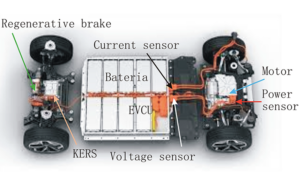
Regenerative braking is only one of the two ways to capture kinetic energy from a moving EV. Another alternative is kinetic energy recovery (KER). Regenerative braking and KER are suitable for different use cases. In addition, there are multiple ways … [Read more...]
How do EVs reduce noise, vibration, and harshness?
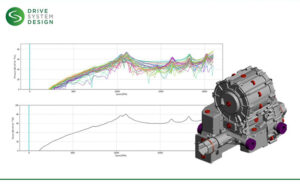
Reducing the effects of noise, vibration, and harshness (NVH) is a top priority for electric vehicle (EV) manufacturers. Indeed, all critical EV systems, including electric motors and regenerative brakes, produce various forms of NVH as functional … [Read more...]
How does regenerative braking work in EVs?

Regenerative braking uses a vehicle’s motor to slow it down, allowing the kinetic energy to be converted into electricity and stored in the battery. This contrasts conventional friction brakes, which convert kinetic energy to heat, which is … [Read more...]
What control strategies can be used for regenerative braking in EVs?

The control strategies for the regenerative brakes on most current EVs are rudimentary. That’s set to change as more sophisticated techniques are developed. There is much more to regenerative braking in electric vehicles (EVs) than simply ‘hitting … [Read more...]