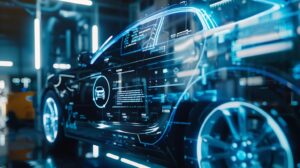
Artificial intelligence (AI) has worked its way into nearly every stage of electric vehicle (EV) development. It shows up early, when researchers evaluate new battery materials, and it stays long after deployment, when operators manage charging … [Read more...]
Q&A: Why dc energy metering matters in high-power EV charging
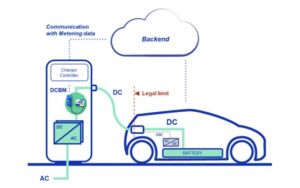
High-power electric vehicle (EV) charging is changing how energy is measured. Passenger vehicles typically charge in shorter sessions, but heavy-duty vehicles (HDVs) can require sustained high-power charging over longer periods, altering the thermal … [Read more...]
Part II: How EV charger reliability changes at scale
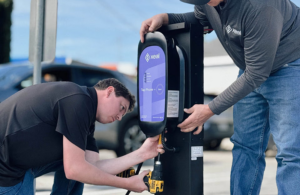
Electric vehicle supply equipment (EVSE) reliability is often discussed in terms of uptime, but large charging networks expose a more practical question. A charger either works reliably across real field conditions, or it creates an operations burden … [Read more...]
Part I: Why EV charger reliability starts at the network edge

Electric vehicle supply equipment (EVSE) reliability is often measured through network dashboards, but drivers experience it in a more direct way. A charger either starts a session and delivers power, or it does not. Once charging … [Read more...]
How AI-assisted simulation is supporting EV battery materials research

Battery development is increasingly shaped by what engineers can predict before a material reaches the lab. For electric vehicle (EV) programs, that shift matters because material choices influence how a battery performs over time and how reliably it … [Read more...]
Q&A: Designing reliable high-voltage interconnects for EV battery systems
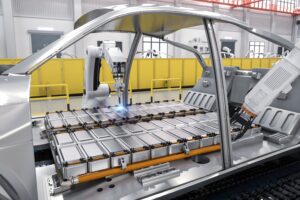
Battery pack engineering puts cells at the center of the early conversation. The interconnect rarely gets the same attention. Yet every joint between cell, module, and busbar carries the same current the cell produces, and the electrical character of … [Read more...]
Why in-process verification is becoming critical for EV manufacturing

Electric vehicle (EV) architectures are getting more complex. Electrified powertrains, high-voltage systems, and integrated thermal management all add critical connections that must be installed correctly the first time. The cost of catching … [Read more...]
Part II: Preparing EV charging infrastructure for V2X
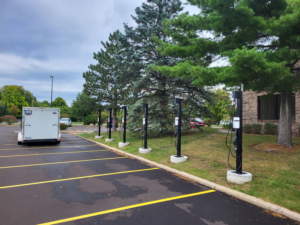
Bidirectional charging has long been discussed as a way to turn EVs into active energy assets rather than passive electrical loads. As vehicle platforms and charging systems become more sophisticated, engineers are beginning to evaluate how charging … [Read more...]
Part I: Designing EV charging infrastructure for reliability

Electric vehicle (EV) charging infrastructure is becoming more complex as EV adoption expands. Engineers are no longer focused solely on power delivery. Infrastructure designs must now support reliable communication between systems while also … [Read more...]
How distributed power architectures are changing EV power systems

Distributed power architectures are changing how energy is converted and distributed across electric vehicle (EV) platforms, particularly as automakers move toward zonal and software-defined vehicle (SDV) designs. Instead of relying on a … [Read more...]
Part II: How V2G systems are moving into real-world deployment

Vehicle-to-grid (V2G) systems are beginning to move beyond pilot programs as utilities and fleet operators explore how electric vehicles (EVs) can function as distributed energy assets. But scaling bidirectional charging also introduces challenges … [Read more...]
Part I: What will it take to scale V2G infrastructure?
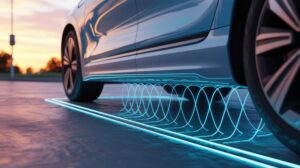
Vehicle-to-grid (V2G) technology has long been positioned as a way to turn electric vehicles into distributed energy assets, capable of supporting grid stability, demand response, and energy storage. However, despite years of development, large-scale … [Read more...]
Q&A: Designing wiring systems for scalable, automated vehicle production

Electric vehicles (EVs) are increasing electrical system complexity, and wiring harnesses have emerged as a key constraint on manufacturing automation and scalability. While many areas of vehicle assembly have benefited from decades of … [Read more...]
Q&A: Rare earth recovery from EV motors and its role in supply chain resilience

Electric vehicle (EV) traction motors rely on rare earth elements to achieve high power density and efficiency, particularly in permanent-magnet designs. As these systems become more widely deployed, attention is turning to how end-of-life motors can … [Read more...]
Q&A: Bridging EV battery component design and production reality

Electric vehicle (EV) battery performance depends on more than cell chemistry. Material selection, component design, and manufacturing processes determine how systems hold up under thermal, mechanical, and environmental stress. Many challenges … [Read more...]
How increased voltage and switching speeds impact sensor placement and accuracy in EVs

The advancements in the electric vehicle (EV) industry, such as wide bandgap (WBG) devices and 800 V systems, introduce specific technical challenges for sensor accuracy and physical placement. Higher operating voltages require more robust … [Read more...]