
Distributed power architectures are changing how energy is converted and distributed across electric vehicle (EV) platforms, particularly as automakers move toward zonal and software-defined vehicle (SDV) designs. Instead of relying on a … [Read more...]
New automotive MOSFETs support 48-V electrical architectures

Toshiba Electronics Europe introduced two AEC-Q101-compliant 80V N-channel MOSFETs designed for 48-V automotive and electric vehicle (EV) power systems. The XPH2R608QB and XPH3R908QB are the first devices based on Toshiba’s latest-generation … [Read more...]
New 48-V MLVs support overvoltage protection in EV power systems
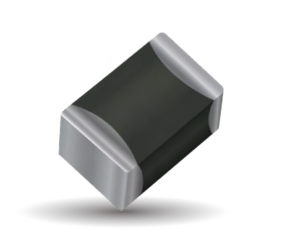
KYOCERA AVX has added new high-temperature, automotive-grade multilayer varistors (MLVs) for 48-V power systems to its TransGuard VT Series. The devices are designed for overvoltage protection and EMI/RFI suppression in automotive and electric … [Read more...]
Collaboration aims to expand SiC integration for 900-V EV platforms

onsemi and Geely Auto Group have expanded their collaboration to integrate silicon carbide (SiC) power technologies into advanced hybrid and electric vehicle (EV) platforms. The effort focuses on incorporating onsemi’s EliteSiC devices into Geely’s … [Read more...]
Why isn’t scaling EVs as simple as adding voltage or battery capacity?
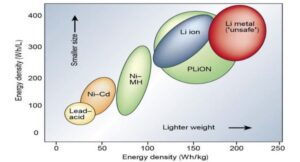
Scaling battery-electric vehicle (BEV) architectures for heavy-duty applications involves nonlinear variables that differ significantly from those in passenger vehicle development. Standard industry practices, such as increasing energy capacity … [Read more...]
Dc-link capacitor development addresses 800 V SiC inverter demands

Peak Nano and Advanced Conversion, a subsidiary of ETI, have entered a partnership to develop dc-link capacitor solutions for high-voltage e-mobility applications. Initial target applications include electric vehicles (EVs), electric buses and … [Read more...]
How do increased voltage levels and faster switching speeds influence sensor placement and accuracy in EV systems?

Advancements in the electric vehicle (EV) industry, such as WBG devices and 800-Volt (V) systems, introduce specific technical challenges for sensor accuracy and physical placement. Higher operational voltages require more robust electromagnetic … [Read more...]
How 800 V+ architectures impact EV connector and contactor requirements

Electric vehicle (EV) architectures operating at 800 V and above deliver measurable efficiency gains by reducing current for a given power level. Because resistive losses scale with the square of current, lower current reduces conduction losses … [Read more...]
Part I: Engineering for megawatt-scale EV charging

Medium and heavy-duty fleet electrification now represents a growing segment of commercial transportation. Higher charging power levels, larger battery capacities, and longer duty cycles are becoming standard design considerations. These shifts place … [Read more...]
How are accelerated life tests changing for high-voltage EV power electronics?

For many years, standards such as AEC-Q101 and the "test-to-pass" method were the only ways to enter automotive power electronics. But since the powertrain has become electric, these static qualification methods are no longer enough. Electric … [Read more...]
What engineering requirements shape EV high-voltage connectors and contactors?
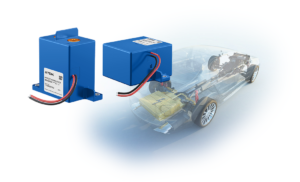
High-voltage electric vehicle (EV) connectors and contactors must comply with a wide range of electrical, thermal, mechanical, and safety requirements. Engineers select these components for current capacity and switching performance, then refine … [Read more...]
Q&A: Addressing engineering challenges in high-voltage EV power architectures

High-voltage electrical architectures are reshaping how electric vehicles (EVs) distribute power, manage safety boundaries, and integrate increasingly dense electrical systems. As voltage levels rise, design teams must balance creepage and … [Read more...]
How advanced fluoromaterials are transforming EV wiring and cable systems

Electric vehicles (EVs) are reshaping mobility through cleaner energy and higher efficiency. However, achieving the potential of EV technology depends on continuous innovation in materials, especially those used in high-voltage wire and cable … [Read more...]