Dürr is introducing EcoRS Generation 2, a new robot platform for paint-shop applications. The series includes four robot models designed for different load capacities and reach requirements, with a standardized architecture intended to simplify system integration, operation, and service.
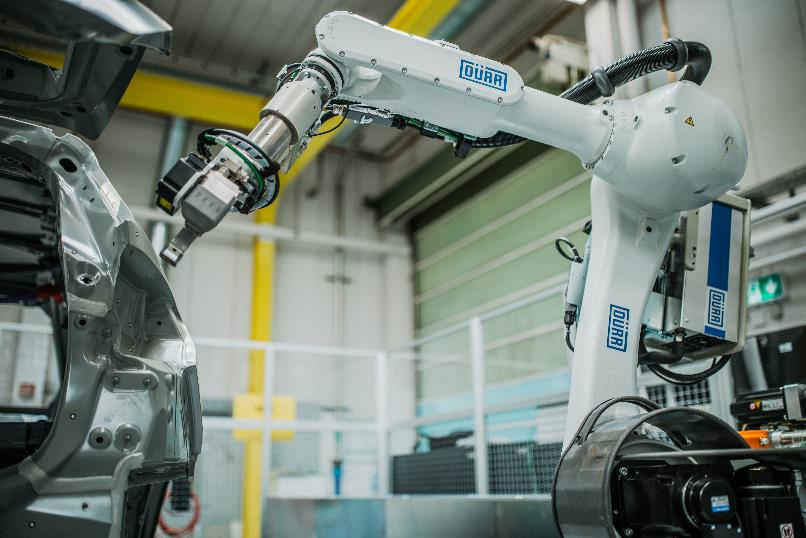
With the new EcoRS generation, Dürr is establishing a standardized platform for sealing applications.
The EcoRS series includes four robot models with load capacities ranging from 20 to 150 kg and reach distances of up to 3,100 mm.
The platform supports sealing, cleaning, and handling applications in automotive paint shops. Its standardized design allows multiple processes to be implemented on a common robotic platform, which can simplify system planning, spare-parts management, and maintenance.
The robots were developed specifically for paint-shop processes, where path accuracy and repeatability directly affect material application and seam quality. Dürr has integrated the robot kinematics, controls, and application technology to support consistent sealing performance, including fine-seam applications on vehicle bodies. The larger work envelope also provides flexibility for different vehicle models and production programs.
EcoRS Generation 2 uses internal motors for axes 3 through 6 and internal cabling. This reduces the robot’s external interference contour, which can improve accessibility within the paint booth and simplify cleaning. The robots have also been reduced in weight and overall space requirements.
The platform uses the same control technology as Dürr’s painting robots and is integrated into the company’s control architecture and DXQ platform. This allows process and operational data from different areas of the paint line to be evaluated within a common software environment and can simplify integration into existing production systems.
By standardizing the robot platform and control architecture, Dürr is also reducing the number of component and spare-part variants required across paint-shop applications. The approach is intended to simplify maintenance and troubleshooting while supporting consistent robotic performance over the equipment lifecycle.
Filed Under: Technology News