Asahi Kasei Microdevices (AKM) says its CZ39 and CZ3K series coreless current sensors have been adopted in Microchip Technology’s machine-learning-based arc fault detection reference design built around the dsPIC33A digital signal controller.
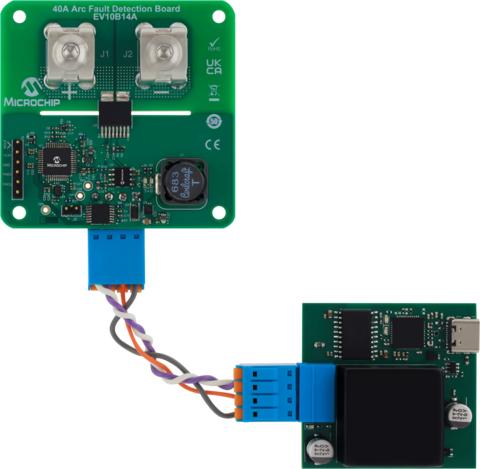 The design is applicable to electric vehicle (EV) charging infrastructure, as well as other power applications.
Arc faults can be difficult to distinguish from normal switching activity in dc systems. In EV charging equipment, relay contact bounce, inverter operation, and capacitor inrush can generate broadband noise in similar frequency ranges, increasing the risk of false detections or missed faults when conventional threshold-based methods are used.
Microchip’s reference design runs the machine-learning model directly on the dsPIC33A, allowing signal processing and inference to take place locally without external processing hardware. The approach is intended to distinguish arc signatures from normal system activity while reducing false triggering.
Current-sensor response and signal quality are important to the detection process because the model depends on capturing the electrical signature of an arc with enough resolution for feature extraction and training. AKM’s CZ39 and CZ3K coreless current sensors have a specified response time of 100 ns and were used during development and validation of the reference design.
The arc fault detection reference design is currently applicable to EV chargers, solar photovoltaic systems, energy storage systems, and other electrical protection applications.
You might also like
Filed Under: Charging, Technology News
Tagged With: asahikaseimicrodevices, charging, microchiptechnology