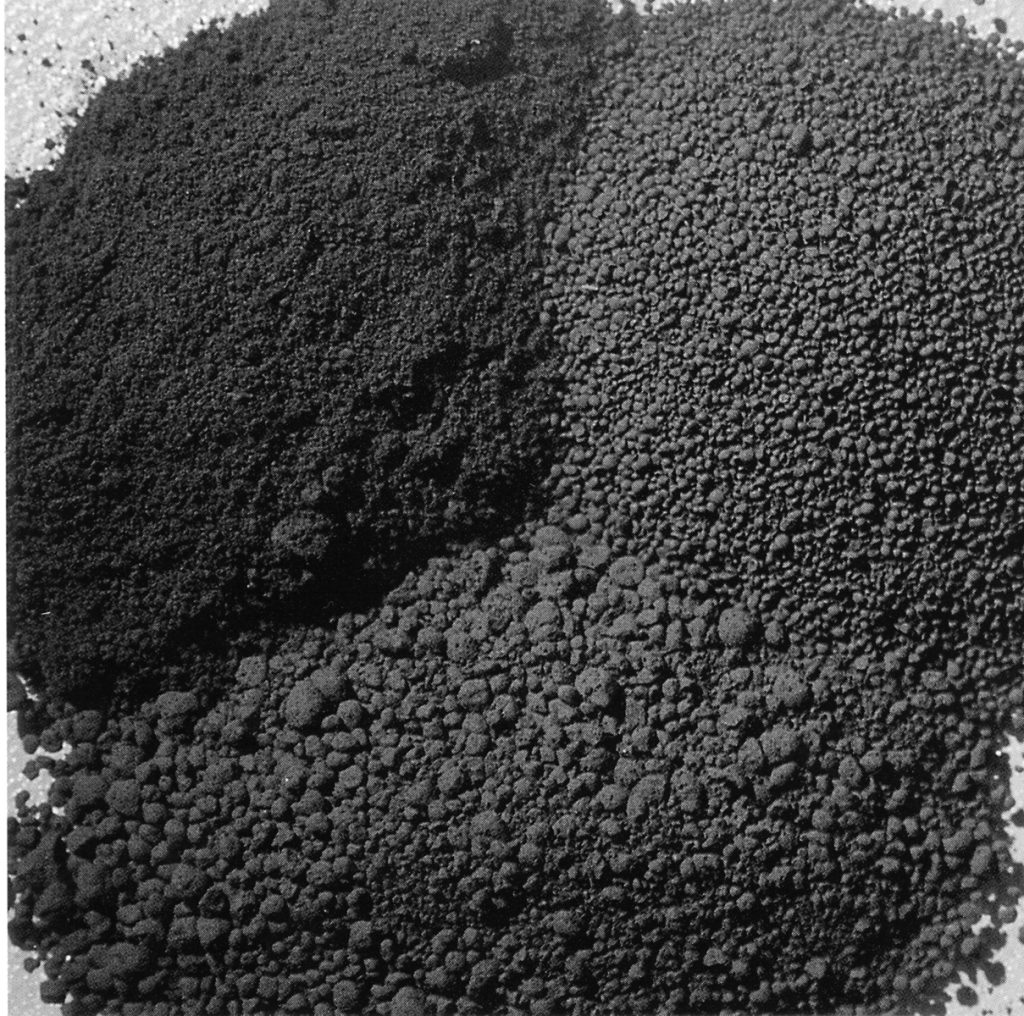
Carbon black is used as a conductive additive in battery electrodes to improve electrical conductivity and performance.
Conductive additives make up a small portion of a battery electrode, yet they play a significant role in cell performance.
Ahead of The Battery Show, Orion S.A. outlined five trends that are reshaping how conductive additives are used in lithium-ion batteries and energy storage technologies.
1. Conductive additives do more than provide electronic conductivity
Conductive additives are increasingly treated as critical components of electrode design rather than simple conductivity enhancers. Their primary role is still to create a continuous three-dimensional conductive network that moves electrons efficiently between active material particles and the current collector.
However, researchers and manufacturers are also paying closer attention to how these materials shape electrode microstructure, which affects pore channels, electrolyte distribution, and ionic transport. Optimizing these factors together can improve active material utilization, rate capability, and cycling performance.
2. Performance requirements are becoming more demanding
Faster-charging electric vehicles, higher-energy-density cells, and longer-lasting energy storage systems are raising expectations for conductive additives. Manufacturers are looking for materials that combine electrical conductivity, low impurity levels, consistent quality, and sustainable production. Carbon blacks made with furnace, lamp, and acetylene processes each suit different battery requirements.
3. Hybrid conductive systems are becoming more common
Combining carbon black with carbon nanotubes offers complementary benefits in conductivity and mechanical resilience. As new cell formats and active materials emerge, engineering conductive networks for specific chemistries is becoming a key area of focus.
4. Automotive quality standards are reaching deeper into the supply chain
Chemical suppliers have historically followed their own industry standards. Today, conductive carbons are increasingly subject to stricter cleanliness requirements, more rigorous traceability, and advanced analytical methods that can detect trace metallic contaminants.
5. Dispersion can be as important as material selection
Slurry preparation is a critical step in electrode manufacturing, where material properties, interactions between formulation components, and mixing conditions must be considered together. Carbon black plays a major role in slurry rheology, so its selection is an integral part of optimizing both the formulation and the process. Balancing these factors supports effective dispersion and consistent electrode production.
At the show
Orion recently received IATF 16949 certification, the automotive quality management standard, at its conductive additives plant in Berre-l’Étang, France. The company also operates a battery applications laboratory where it works with cell developers on conductive additive formulations for lithium-ion, lead-acid, and emerging battery chemistries. Orion will discuss these trends at The Battery Show, October 12 to 15 at Huntington Place in Detroit (Booth 2942).
Filed Under: Batteries, FAQs, Technology News