EV Engineering & Infrastructure

  • News
  • Articles
    • Q&As
    • Tech Spotlight
  • Batteries
  • Charging
    • Wireless Charging
    • Vehicle-to-Grid (V2G)
  • Electrification
  • Testing and Safety
  • Learn
    • Learning Center
    • Tech Toolboxes
    • Webinars
  • Resources
    • Digital Editions
    • Diversity & Inclusion
    • Voices
  • Advertise
  • Subscribe

Connector-based controller extends dc charging distance to 100 meters

By Michelle Froese | September 10, 2026

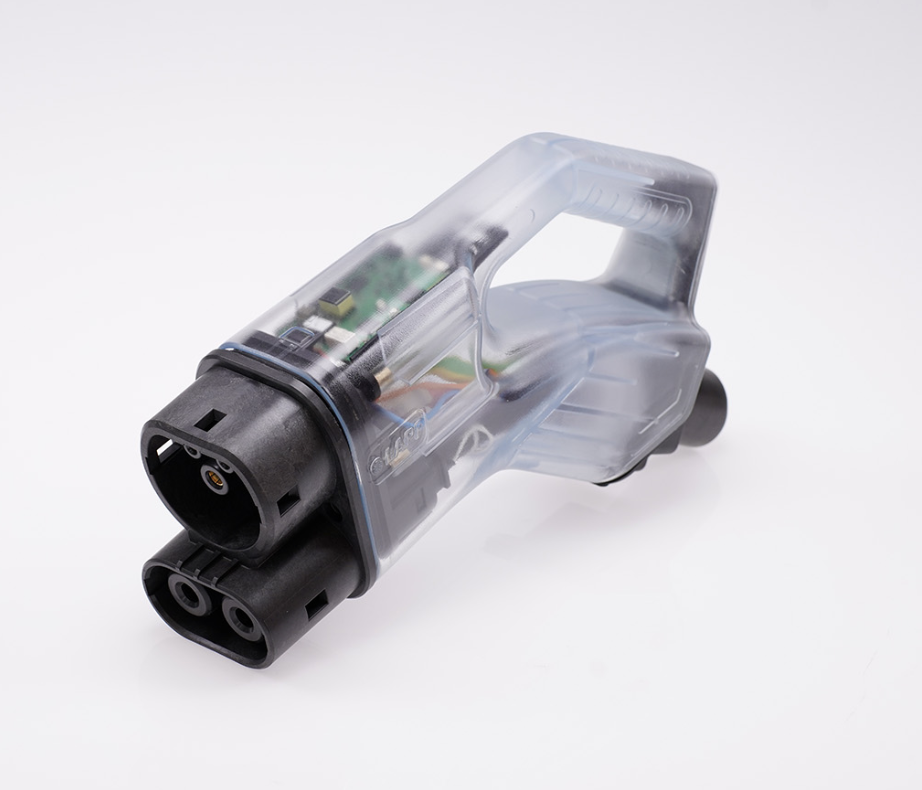
Vector has introduced vSECC.InPlug, a communication controller board for dc charging infrastructure that enables cable runs of up to 100 meters between the vehicle and charging station.
The system is intended for electric bus and truck depots where charging points may need to be separated from centrally located power electronics.

Conventional dc charging architectures typically limit the distance between the charging communication controller and the vehicle to about 7.5 meters. With vSECC.InPlug, Vector moves the charging communication controller into the dc connector, where it handles power line communication with the vehicle.

A second controller remains in the central control cabinet to manage the charging process, communication protocols, power electronics, and backend connectivity. This architecture allows charging points to be placed at vehicle parking positions while the power electronics remain in locations with suitable power supply and cooling.

Vector says the system is suited to depot layouts with distributed charging points or centralized power electronics. It can also be integrated into charging connectors and system designs from other infrastructure manufacturers.

The vSECC.InPlug supports IEC 61851, DIN SPEC 70121, ISO 15118-2, and ISO 15118-20. Vector has also integrated the board into a dc charging connector developed with LAPP Mobility.

Vector is also introducing vCharM.DMS, a depot management system for small and medium-sized bus depots. The software brings vehicle status, parking information, maintenance data, and scheduled departures into a shared operational view.

For electric bus fleets, vCharM.DMS can connect with Vector’s vCharM charging and energy management system. Departure times and required state of charge can then be incorporated into charging planning so the system can determine charging start times and prioritize vehicles based on operational requirements.

You might also like


Filed Under: Charging, Technology News
Tagged With: charging, vector
 

Next Article

← Previous Article
Next Article →


“ee
EXPAND YOUR KNOWLEDGE AND STAY CONNECTED
Get the latest info on technologies, tools and strategies for EV professionals.

Tech Spotlight

  • Why high-power EV charging is pushing control integration into one ECU
  • Designing safety into the cell: The case for system-level solid-state batteries
More Tech Spotlight

Featured Contributions

  • How do two-level and three-level inverter topologies compare in EVs?
  • Inside the development of the Megawatt Charging Standard
  • How does fault-tolerant control keep an EV operating after a sensor failure?
  • Q&A: How EV architectures are changing high-speed connectivity
  • How to catch EV faults before they become failures
More Featured Contributions

EV TECH TOOLBOX

“ee
Explore the EV Engineering Tech Toolboxes: a collection of high-impact articles that break down the latest EV design trends and technologies. Download to stay aligned with today’s evolving EV design challenges.

Learning Center

EE Learning Center

Sponsored Content

  • Converting custom materials for EV applications
  • Advantech Powers Versatile Electric Vehicle Charging Systems

EV Training Days

ev
Q&A
EV Engineering & Infrastructure
  • 5G Technology
  • Analog IC Tips
  • Battery Power Tips
  • Connector Tips
  • EDABoard Forums
  • Electro-Tech-Online Forums
  • Engineer’s Garage
  • Microcontroller Tips
  • Power Electronic Tips
  • Sensor Tips
  • Test and Measurement Tips
  • Contact Us

Copyright © 2026 Arrowfly LLC. All Rights Reserved. The material on this site may not be reproduced, distributed, transmitted, cached or otherwise used, except with the prior written permission of Arrowfly
Privacy Policy | Advertising | About Us

Search EV Engineering & Infrastructure

  • News
  • Articles
    • Q&As
    • Tech Spotlight
  • Batteries
  • Charging
    • Wireless Charging
    • Vehicle-to-Grid (V2G)
  • Electrification
  • Testing and Safety
  • Learn
    • Learning Center
    • Tech Toolboxes
    • Webinars
  • Resources
    • Digital Editions
    • Diversity & Inclusion
    • Voices
  • Advertise
  • Subscribe