Coesia will showcase a range of manufacturing technologies at The Battery Show North America, designed to support higher-volume lithium-ion battery production, with a focus on improving process control, automation, and scalability for electric vehicle (EV) cell manufacturing. The show takes place from October 13 to 15, 2026, in Detroit, MI (Booth 4800).
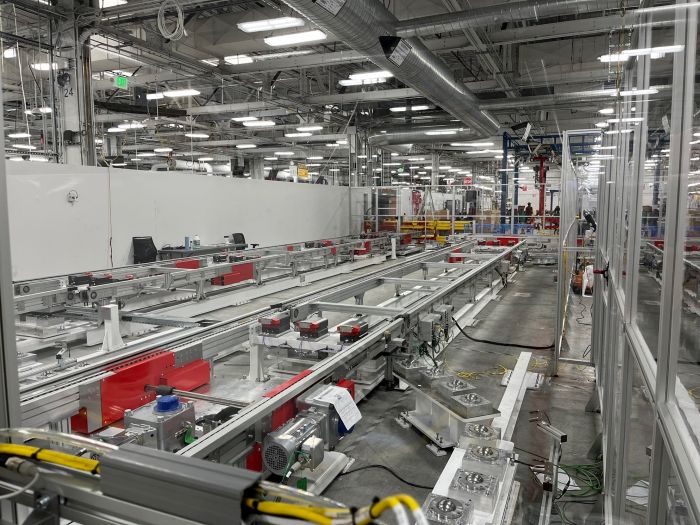 A major focus is cell production equipment developed through G.D, including systems for winding, stacking and cell assembly. These processes play a direct role in cell consistency and manufacturing yield, particularly as EV battery plants scale production while maintaining tight dimensional and material tolerances.
The equipment supports cylindrical and prismatic cell formats and is designed for integration into automated production lines. Coesia says the technologies are already deployed in gigafactories, where stable production and consistent overall equipment effectiveness are important to controlling cell quality and cost.
Coesia has also expanded its battery manufacturing portfolio with Cerulean, which provides computed tomography inspection systems for nondestructive quality control. CT inspection can allow manufacturers to identify internal cell defects without dismantling the cell, supporting quality assurance earlier in the production process.
Other Coesia companies address additional stages of battery production. COMAS develops electrode manufacturing equipment, while Norden provides electrolyte filling technology. System Electronics supplies formation and aging systems intended to increase throughput while reducing factory-floor requirements.
Factory automation is supported through FlexLink, AMC and Autoware, which provide material handling, system integration and digital manufacturing technologies. Bringing these processes together can help EV battery manufacturers coordinate production flow while reducing handling between individual manufacturing stages.
The technologies are intended to support battery producers as cell designs, production volumes and manufacturing requirements continue to evolve. For EV manufacturers, tighter integration across production and inspection can help improve consistency as battery plants move toward higher throughput and increasingly automated operation.
Filed Under: Batteries, Technology News