VisIC Technologies and AVL have integrated VisIC’s gallium nitride (GaN) power modules into an electric vehicle (EV) demonstrator, moving the technology from laboratory and dynamometer testing into a complete vehicle environment.
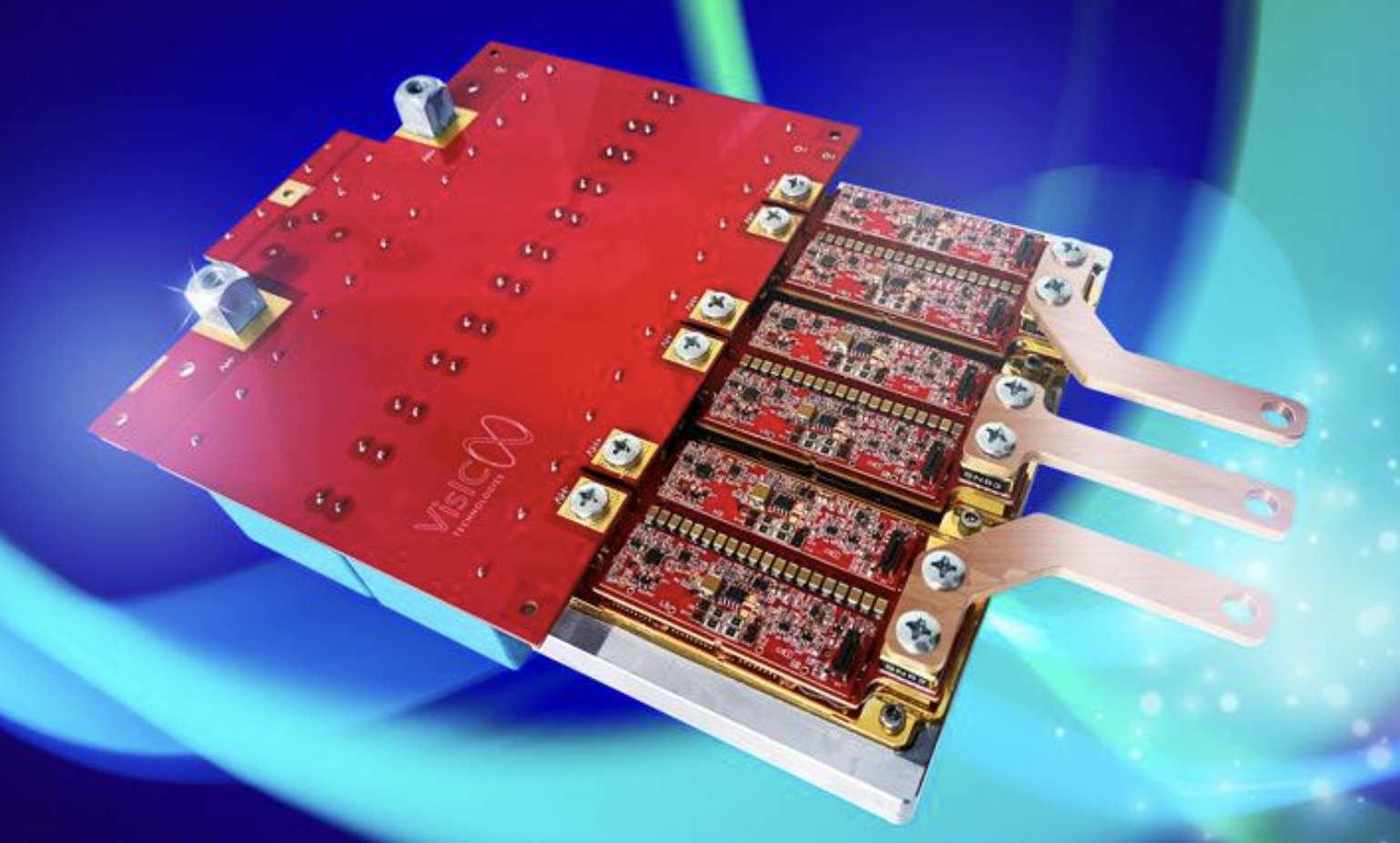 The project combines a GaN traction inverter with a high-speed e-axle, power electronics, and vehicle control systems to evaluate the technology in an electric drivetrain.
The demonstrator incorporates VisIC’s D³GaN power modules alongside AVL’s inverter development and vehicle integration technologies. NXP Semiconductors also contributed to the project, which builds on a collaboration between AVL and VisIC that began in 2024.
In earlier dynamometer testing at AVL’s facilities in Germany, an inverter using VisIC’s GaN-on-silicon technology achieved 99.67% efficiency at a 10 kHz switching frequency and more than 99.8% at 5 kHz. Under the tested conditions, the companies reported more than 60% lower inverter energy losses compared with comparable silicon carbide (SiC) inverters.
VisIC’s D³GaN technology is designed to reduce switching and conduction losses while increasing power density. These characteristics are particularly relevant during partial-load operation, where lower switching losses can improve inverter efficiency and reduce cooling requirements.
Integrating the inverter into a complete vehicle allows the companies to evaluate its performance across different speed, torque, and load conditions. The demonstrator provides a platform for assessing how improvements measured during inverter testing translate to drivetrain efficiency and vehicle-level performance.
AVL and VisIC are also working toward extending the GaN-on-silicon platform to 800 V power modules for higher-voltage EV architectures. The technology is compatible with established silicon semiconductor manufacturing processes, including 200 mm and 300 mm foundries, providing a potential path toward higher-volume production.
Filed Under: Inverter, Power Electronics, Technology News